
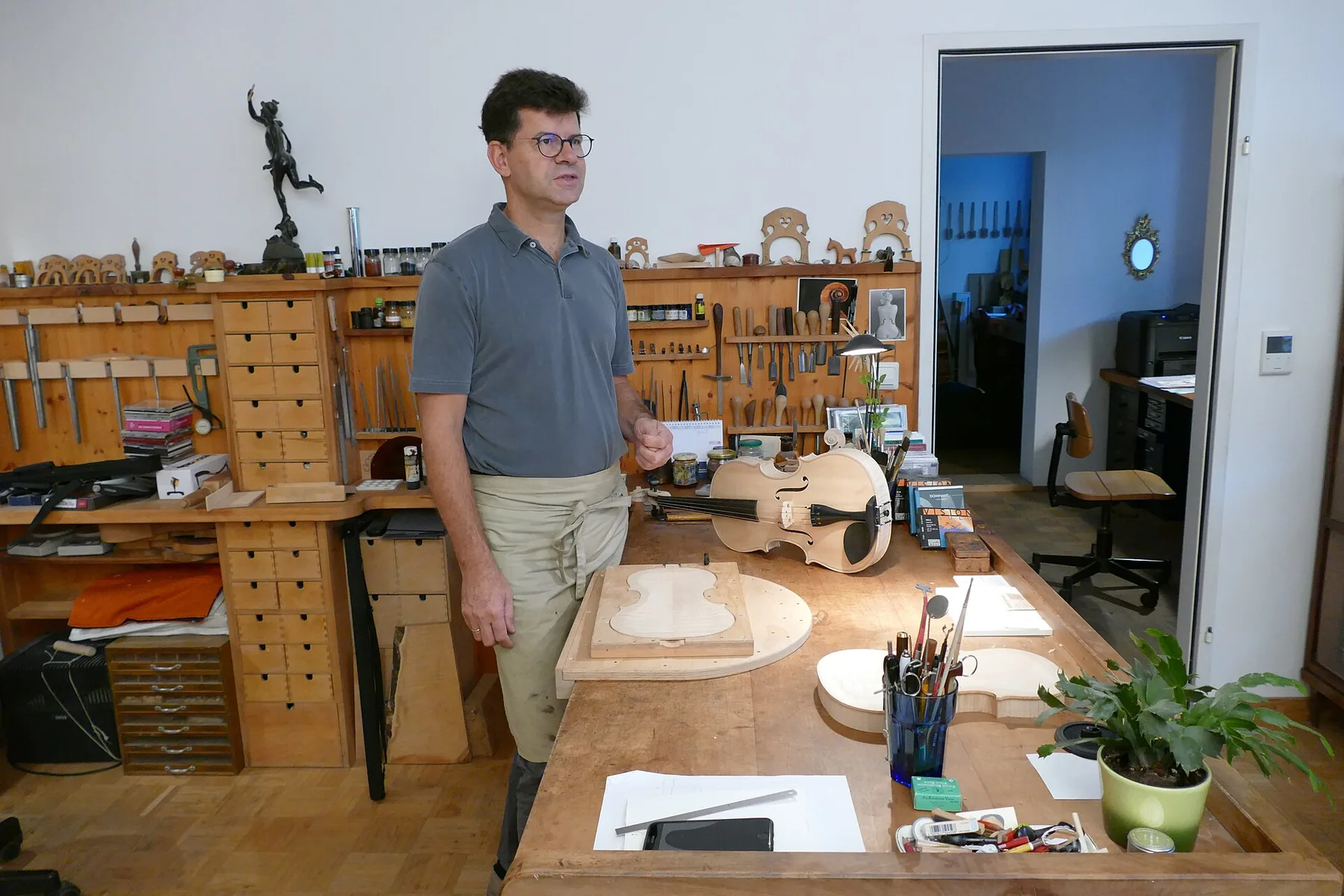
Lutherie training offers several paths and career prospects for people who want to master the art of making musical instruments. This vocational training in instrument making, such as the CAP assistant violin-family luthier qualification, prepares skilled professionals for the musical crafts. Students learn to make, repair and maintain instruments such as violins, violas, cellos and double basses. Offered by recognized institutions, this specialized training helps students develop advanced technical skills and artistic abilities, opening up promising career prospects in lutherie.
Lutherie training offers many paths and career prospects for people who want to specialize in making musical instruments. Through an apprenticeship or continuing education, music enthusiasts can attend a lutherie school and gain the skills needed to become professionals. Lutherie training is also a form of vocational training that offers opportunities to develop and thrive in the crafts.
CAP assistant violin-family luthier curriculum
The two-year training program for the CAP assistant violin-family luthier qualification is designed to develop students’ technical skills in making and repairing string instruments. This comprehensive program includes both vocational subjects specific to lutherie and general subjects that provide broader knowledge.
Vocational subjects give students in-depth training in lutherie. They study technology and art history, along with traditional and contemporary methods of making string instruments. They also learn to interpret drawings and scales and examine the technical properties of materials. Students have opportunities to take part in practical instrument-making workshops and apply what they have learned.
General subjects complement the vocational training by providing essential additional skills. Students take classes in French, history and geography, mathematics, and physical sciences, giving them a broad and balanced education.
By the end of the program, students can make, repair and maintain string instruments using advanced technical skills. They gain a solid understanding of construction methods, materials and the history of lutherie. These skills open the door to promising career opportunities in the field.
Vocational subjects in the CAP assistant violin-family luthier qualification:
| Subjects | Description |
|---|---|
| Technology and art history | Study of string-instrument construction methods and the development of lutherie throughout history. |
| Applying construction techniques | Learning traditional and contemporary methods of making string instruments. |
| Interpreting drawings and scales | Understanding the drawings and scales used in string-instrument making. |
| Technical properties of materials | In-depth study of materials used in lutherie, with a focus on their technical properties. |
| Practical instrument-making workshops | Applying acquired knowledge in workshops devoted to making a string instrument. |
General subjects in the CAP assistant violin-family luthier qualification:
- French
- History and geography
- Mathematics
- Physical sciences
Admission requirements and qualities needed for the CAP assistant violin-family luthier qualification
Applicants for the CAP assistant violin-family luthier qualification must meet certain admission requirements. They must be at least 16 years old and have completed the equivalent of the French troisième school year. This instrument-making training requires a solid foundation to help students succeed.
The admissions process may vary between institutions and may include interviews. These allow schools to assess applicants’ motivation, knowledge of music and aptitude for developing advanced technical skills.
Certain qualities are needed to succeed in this lutherie program. A passion for music is essential. Students should have a deep love of music and want to contribute to it by making quality instruments.
Artistic sensitivity is also important. Lutherie is an art, and students must be able to appreciate the beauty and appearance of the instruments they create. This sensitivity helps them work carefully and precisely.
Specific technical skills are essential for success in the program. Students must be able to handle specialized tools, take accurate measurements and understand how string instruments are made.
Knowledge of materials, particularly wood, is also necessary. Students must understand the different properties of materials used in lutherie and know how to work them to achieve the desired sound.
Finally, a strong interest in craftsmanship is vital. Lutherie demands patience, attention to detail and discipline. Students must be willing to devote time and effort to creating quality instruments.
In short, the CAP assistant violin-family luthier qualification is demanding but rewarding. Applicants must meet the admission requirements and have the qualities needed to succeed in lutherie.
Further study and career opportunities after the CAP assistant violin-family luthier qualification
After earning the CAP assistant violin-family luthier qualification, graduates can continue their studies in lutherie. One option is the advanced BMA (brevet des métiers d’art) qualification in instrument making, with a guitar specialization. This allows them to deepen their skills and specialize further. They can gain additional expertise and broaden their career prospects.
There are many varied career opportunities after earning the CAP assistant violin-family luthier qualification. Graduates can work as luthiers, instrument makers or musical-instrument restorers. They may work in music schools, conservatories, symphony orchestras, museums, specialist lutherie businesses or public organizations that promote music and the arts.
These career opportunities can offer graduates stimulating and rewarding work. They can find fulfillment in making and repairing musical instruments while helping to preserve and carry forward the art of music. These careers also allow lutherie enthusiasts to work closely with musicians and contribute to exceptional musical performances.
Examples of career opportunities after the CAP assistant violin-family luthier qualification
| Careers | Workplaces |
|---|---|
| Luthier | Music schools, conservatories, specialist lutherie businesses |
| Instrument maker | Symphony orchestras, museums, public organizations |
| Musical-instrument restorer | Specialist lutherie businesses, conservatories |
These examples offer only a glimpse of the possibilities available to graduates of the CAP assistant violin-family luthier qualification. Depending on their interests and goals, they can also start their own lutherie business or pursue further study to specialize in a particular area.
Conclusion
Lutherie training offers many paths and career prospects for people who want to specialize in making musical instruments. The CAP assistant violin-family luthier qualification provides high-quality specialist training that enables students to develop advanced technical skills in making and repairing string instruments.
This training opens up promising career prospects in lutherie, with opportunities in sectors such as music schools, conservatories, orchestras and specialist businesses. Graduates can also continue their studies to deepen their knowledge and specialize further. Whichever path they choose, lutherie training offers opportunities for professional fulfillment in music and craftsmanship.
FAQ
What career opportunities are available after the CAP assistant violin-family luthier qualification?
Graduates can work as luthiers or instrument makers and find opportunities in music schools, conservatories, symphony orchestras, museums, specialist lutherie businesses or public organizations that promote music and the arts.
What are the admission requirements for the CAP assistant violin-family luthier qualification?
Applicants must be at least 16 years old and have completed the equivalent of the French troisième school year. Admissions procedures vary between institutions and may include interviews.
What qualities are needed to enter lutherie training?
The qualities needed for this training include a passion for music, artistic sensitivity, precise technical skills, knowledge of materials (particularly wood) and an interest in craftsmanship. Teamwork and precision are also important for success in this field.


