

The parlor guitar is an iconic historic instrument, valued for its compact size and balanced sound. Originating in the 19th century, it was often played at intimate concerts in the parlors of high society. The design has evolved over time, adapting to technical innovations and musical trends.
With its smaller body, the parlor guitar stands out for its playing comfort and distinctive sound. It is an ideal choice for guitarists seeking a quality instrument that combines tradition and modernity. Its slim neck and suitable scale length make it ideal for fingerpicking.
If you would like to learn more about this design or explore alternatives such as the travel guitar, this guide offers an in-depth look at its features and uses.
Introduction to the parlor guitar in luthiery
The parlor guitar, a compact stringed instrument, has left its mark on music history. Dating from the 19th century, it was often played at intimate concerts in the parlors of high society.
Historical origins and context
Developed when chamber music was fashionable, the parlor guitar evolved to suit changing musical tastes. Its compact size and balanced sound made it an ideal instrument for performers of the time.
- Designed for intimate concerts
- Popularized in the parlors of high society
- Evolved alongside musical innovations
Importance in musical tradition
The parlor guitar holds an important place in music history, particularly in folk and pop. Its slim neck and compact size make it a favored instrument for fingerpicking.
- A favored instrument for fingerpicking
- A notable influence on parlor music
- An influence on the development of folk music
The parlor guitar’s unique characteristics
The parlor guitar stands out for its compact size and exceptionally balanced sound. Designed for an intimate musical experience, it is ideal for guitarists seeking an instrument that is both versatile and refined.
Compact size and intimate character
The parlor guitar’s compact size is one of its greatest strengths. Its smaller body makes it comfortable to play, especially for guitarists who favor fingerpicking or subtle rhythms. Its design provides balanced sound projection, making it ideal for musicians who want to explore delicate nuances.
Sound quality and balanced projection
The parlor guitar impresses with its distinctive sound, characterized by balanced midrange frequencies and controlled projection. Materials such as a spruce top and mahogany back enhance its acoustic quality, adding the richness and depth that guitarists appreciate.
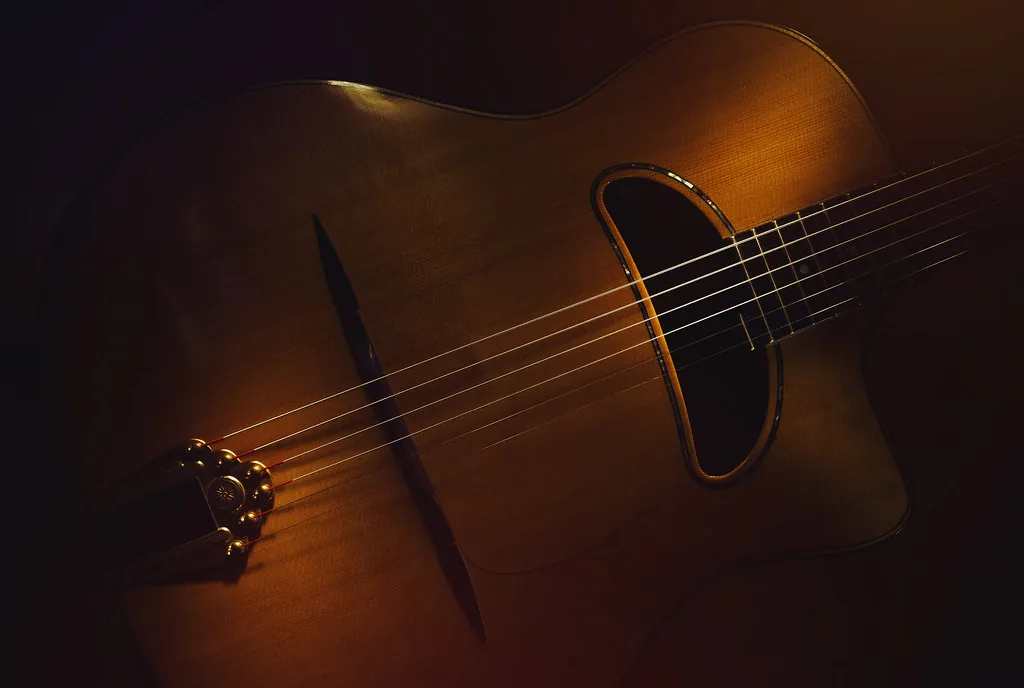
The slim, ergonomic neck keeps the guitarist comfortable while making movement and precise playing easier. This design is therefore particularly well suited to musicians who want to combine technique with musical expression.
| Feature | Benefit |
|---|---|
| Compact size | Greater playing comfort |
| Balanced sound | Controlled sound projection |
| Selected materials | Enhanced acoustic quality |
| Ergonomic neck | Ease of playing |
In short, the parlor guitar combines tradition and innovation while offering musicians refined sound and excellent playing comfort. Suited to a range of styles, from folk music to more intimate compositions, it is an excellent choice for those seeking quality and precision.
What is a parlor guitar in luthiery?
The parlor guitar, a compact stringed instrument, is part of music history. Originating in the 19th century, it was often played at intimate concerts in the parlors of high society.
Designed for an intimate musical experience, the parlor guitar has evolved over the years while retaining its essential characteristics. Luthiers have played a key role in making it, selecting quality materials to improve its sound and playing comfort. Its compact size meets the needs of modern guitarists, offering a comfortable feel and balanced sound.
The parlor guitar’s design reflects its rich history: influences from the past have shaped its appearance and construction. Its slim neck and balanced sound make it a favored instrument for fingerpicking and delicate nuances. This historic design continues to appeal to contemporary musicians by combining tradition and modernity.
Contemporary applications and varied uses
Today, the parlor guitar is a versatile instrument suited to many musical settings. Its renewed popularity comes from its acoustic precision and its ability to work well both on stage and in the studio.
Adapting to different musical styles
The parlor guitar stands out for its versatility. In folk, blues, or acoustic music, its balanced sound fits naturally into different styles. Its slim neck and compact body make nuanced playing easier, making it ideal for guitarists who want to explore several genres.
Use on stage and in the studio
On stage, the parlor guitar appeals to musicians because its comfortable, manageable size lets them focus on their performance. In the studio, its clear, precise sound cuts through complex mixes, providing an acoustic quality that producers value. Many artists attest to its effectiveness in both settings.

To learn more about different guitar body shapes and their uses, consult this detailed guide.
Comparison with other acoustic guitar body shapes
Acoustic guitars come in a variety of body shapes, each with its own characteristics. Although smaller, the parlor guitar stands out for its balanced sound and playing comfort.
Dreadnought, Jumbo, and Concert: key differences
With its large body, the Dreadnought is ideal for musicians seeking a powerful sound and strong projection. The Jumbo is the largest acoustic guitar shape and delivers exceptional volume. The more compact Concert is known for its balanced sound and versatility.
| Model | Characteristics | Advantages |
|---|---|---|
| Parlor | Small body, slim neck | Playing comfort, balanced sound |
| Dreadnought | Broad body, large build | Powerful projection, well suited to bluegrass |
| Jumbo | Larger body | High volume, ideal for concerts |
| Concert | Balanced sound, versatility | Suited to various musical styles |
Despite its modest size, the parlor guitar offers a distinctive sound and a comfortable playing experience. It is particularly well suited to guitarists who favor fingerpicking and subtle nuances.
Ultimately, every acoustic guitar body shape has strengths and limitations. With its intimate character and refined sound, the parlor guitar remains an excellent choice for those seeking a versatile, expressive instrument.
Historical influences and modern construction techniques
With its rich history, the parlor guitar illustrates a significant evolution in instrument making. Since its beginnings in the 19th century, construction methods have changed over the decades while the instrument has retained its musical identity.
The evolution of craft methods and innovations in luthiery
Luthiers have played a central role in preserving and developing the parlor guitar. Traditionally, it was made entirely by hand using techniques passed down through generations. Today, these methods are combined with modern technology to improve sound quality and playing comfort.
- Materials selected to optimize sound
- Technical innovations that preserve the original spirit
- A balance between tradition and modernity
Technological advances, such as internal reinforcement systems, have improved the parlor guitar’s durability. Combined with fine materials, these innovations allow clearer sound projection and better resonance, meeting the expectations of contemporary musicians.
Modern assembly methods have also made quality more consistent while respecting craft principles. Luthiers continue to push the boundaries of construction, incorporating innovative solutions while remaining faithful to the parlor guitar’s heritage.
To learn more about the distinctive features of the parlor guitar and its evolution, consult this detailed guide. Luthiers, such as those featured on this site, play an essential role in preserving this craft.
In conclusion, the parlor guitar reflects the evolution of construction techniques across history and innovation. Its compact size and distinctive sound make it popular with musicians who want to combine tradition and modernity.
Conclusion
The parlor guitar, a compact stringed instrument, elegantly combines tradition and modernity. Its rich history, dating back to the 19th century, makes it appealing to musicians who want to explore delicate nuances. Its exceptionally balanced sound and playing comfort make it a favored choice for guitarists.
The parlor guitar’s features, such as its compact body and slim neck, make it pleasant to play and give it a balanced sound. Ideal for fingerpicking, it suits a range of styles, from folk music to more intimate compositions. Its intimate character and acoustic quality make it popular for concerts and recordings.
Luthiers have preserved the parlor guitar’s historic heritage while incorporating modern innovations. Its adaptability to different musical settings and the craftsmanship involved in its construction make it an exceptional instrument. Whether you are an experienced guitarist or a beginner, the parlor guitar is a versatile way to express your music with precision and feeling.
FAQ
What are the main characteristics of a parlor guitar?
Why choose a parlor guitar?
How does a parlor guitar compare with other acoustic body shapes?
Is a parlor guitar suitable for studio recording?
What are the historical origins of the parlor guitar?
How has the parlor guitar evolved over time?
What does a parlor guitar sound like?
Is a parlor guitar only for professionals?
How do I choose the right parlor guitar for me?
Can a parlor guitar be used at concerts?
What influence has the parlor guitar had on music history?
How should I care for a parlor guitar to preserve its quality?
Is a parlor guitar suitable for fingerstyle playing?
Source links
- https://en.wikipedia.org/wiki/Parlor_guitar
- https://www.guitarworld.com/features/best-travel-guitars
- https://en.wikipedia.org/wiki/Acoustic_guitar
- https://www.musicradar.com/news/best-acoustic-guitars-for-beginners-beginner-acoustic-guitars
- https://www.guitarworld.com/features/best-yamaha-acoustic-guitars


