
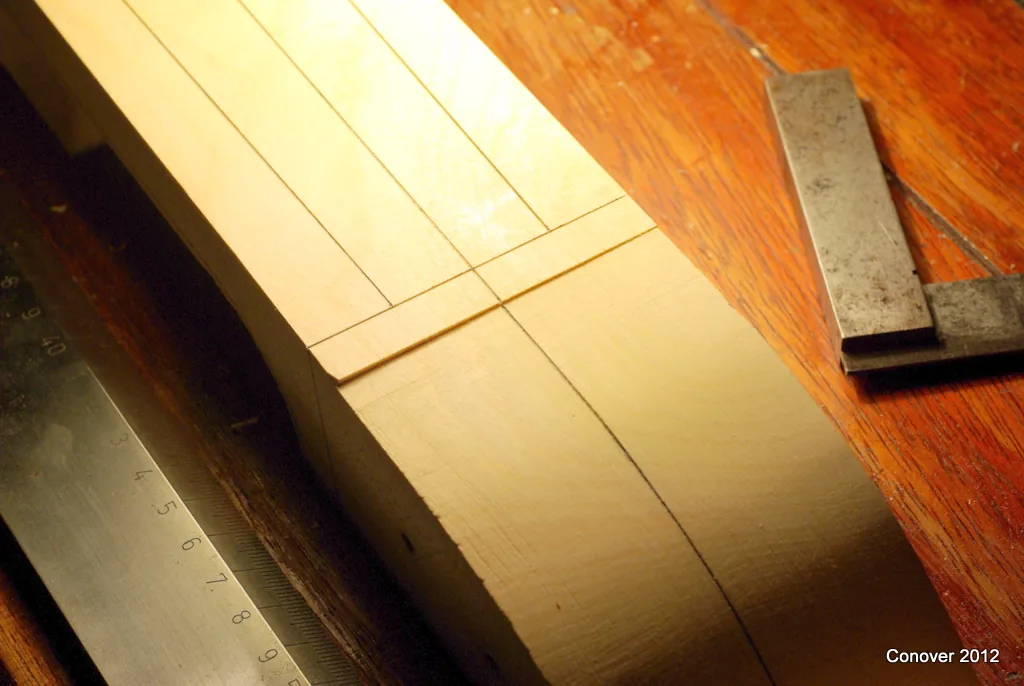
A guitar neck is much more than a structural component. It plays a central role in transmitting string vibrations to the soundboard, helping the instrument produce its best sound. The quality of the selected wood and the precision of its assembly are key to a rich, balanced tone.
Making a neck requires meticulous craftsmanship. The choice of wood, often maple or another species, directly influences the instrument’s sound. The assembly must also be precise to prevent any loss of vibration that could affect the guitar’s tone.
Setting up the neck is another crucial step. The string height and fret intonation are carefully adjusted for comfortable playing. These delicate adjustments call for a luthier’s expertise in both mechanics and music.
Finally, regular neck care is essential to maintaining the instrument’s performance. The constant vibrations of the strings can affect the wood’s stability over time and require periodic adjustments. Discover how luthiers meet these challenges to create instruments of exceptional quality.
Understanding the fundamental role of the neck in luthiery
The neck is an essential part of the guitar and plays a key role in transmitting string vibrations to the soundboard. Its design and construction directly affect sound quality and playing comfort.
Anatomy and essential functions
The neck has several key parts:
- The fingerboard, which is the playing surface
- The frets, which divide the fingerboard into positions
- The nut, which supports the strings
- The headstock, which holds the tuning machines
Each part has a specific role in transmitting vibrations and keeping the instrument in tune.
Choosing wood species and their effect on sound
The choice of wood is crucial to sound quality. Here is a comparison of the main species used:
| Wood species | Sound characteristics | Advantages |
|---|---|---|
| Cedar | Clear, bright sound | Dimensional stability |
| Spruce | Balanced, warm sound | Resistance to wear |
| Maple | Precise, lasting sound | Attractive appearance |
Cedar offers exceptional clarity, while spruce provides warmth and depth valued by guitarists. Spruce, often used for soundboards, is selected for its fine grain and lack of knots, making it an ideal material for transmitting vibrations effectively.
As an experienced luthier explains: “Choosing wood is a step where science meets art, because each species gives the instrument a unique character.”
Setting up the neck, including string height and fret adjustment, is crucial to playing comfort and intonation. For more details on these adjustments, see our complete guide.
The role of the guitar neck in luthiery: construction and care
The guitar neck plays an essential role in transmitting sound vibrations and making the instrument comfortable to play. Its construction and care are crucial to an enjoyable playing experience.
Importance in transmitting vibrations
The quality of the neck joint directly affects how vibrations travel from the strings to the soundboard. A well-made neck helps produce a rich, balanced sound. Here is a comparison of the main wood species used for necks:
| Wood species | Sound characteristics | Advantages |
|---|---|---|
| Maple | Precise, lasting sound | Attractive appearance |
| Cedar | Clear, bright sound | Dimensional stability |
| Spruce | Balanced, warm sound | Resistance to wear |
Each wood species has distinctive characteristics that influence the instrument’s sustain and intonation.
Effects on playing comfort and intonation
The design of the neck and fingerboard plays a key role in playing comfort. String height and fret adjustment must be set carefully for enjoyable, accurate playing. To learn more about these adjustments, see expert advice or explore the beginner’s guides.

Techniques for making and attaching the neck
Making and attaching the neck are crucial steps in building a guitar. Each attachment method has advantages and disadvantages that affect sound and playing comfort.
Neck-through, bolt-on or set-in: advantages and disadvantages
The three main neck attachment methods are neck-through, bolt-on and set-in construction. Each has distinct technical characteristics.
| Attachment method | Advantages | Disadvantages |
|---|---|---|
| Neck-through | Longer sustain, greater rigidity | Complex construction, high cost |
| Bolt-on neck | Easy maintenance, faster production | Less sustain, less warmth |
| Set-in neck | Warm sound, lasting sustain | Difficult repairs, higher cost |
A luthier explains: “Choosing a neck attachment method means balancing sound and practicality; every approach has trade-offs.”
Assembly methods and mechanical adjustment
Assembly methods vary by attachment type. The neck-through design used on Leduc BD3 guitars uses three pieces of wood for maximum rigidity. The bolt-on neck used on Leduc BD2 guitars allows easy adjustment. A set-in neck provides effective vibration transfer.
- Neck-through: longer sustain, deep sound
- Bolt-on neck: easier maintenance, faster production
- Set-in neck: warm sound, lasting sustain
Mechanical setup, particularly string height and fret adjustment, is crucial to playing comfort. Discover how these adjustments affect the instrument’s performance.
Neck care, adjustment and optimization
Regular, careful maintenance is essential to keeping your guitar neck performing well. Precise adjustments and attentive care help preserve playing comfort and accurate notes, even in unfavorable climates.
Fine-tuning: leveling frets and adjusting the nut
Fret leveling is crucial to making a guitar easy to play. Check regularly that the frets are level, using specialized tools to prevent fret buzz. The nut should be adjusted carefully, following the recommended string heights for your type of guitar. For example, on an electric guitar, string height at the 12th fret should be 2 mm for the high E string and 2.5 mm for the low E string.
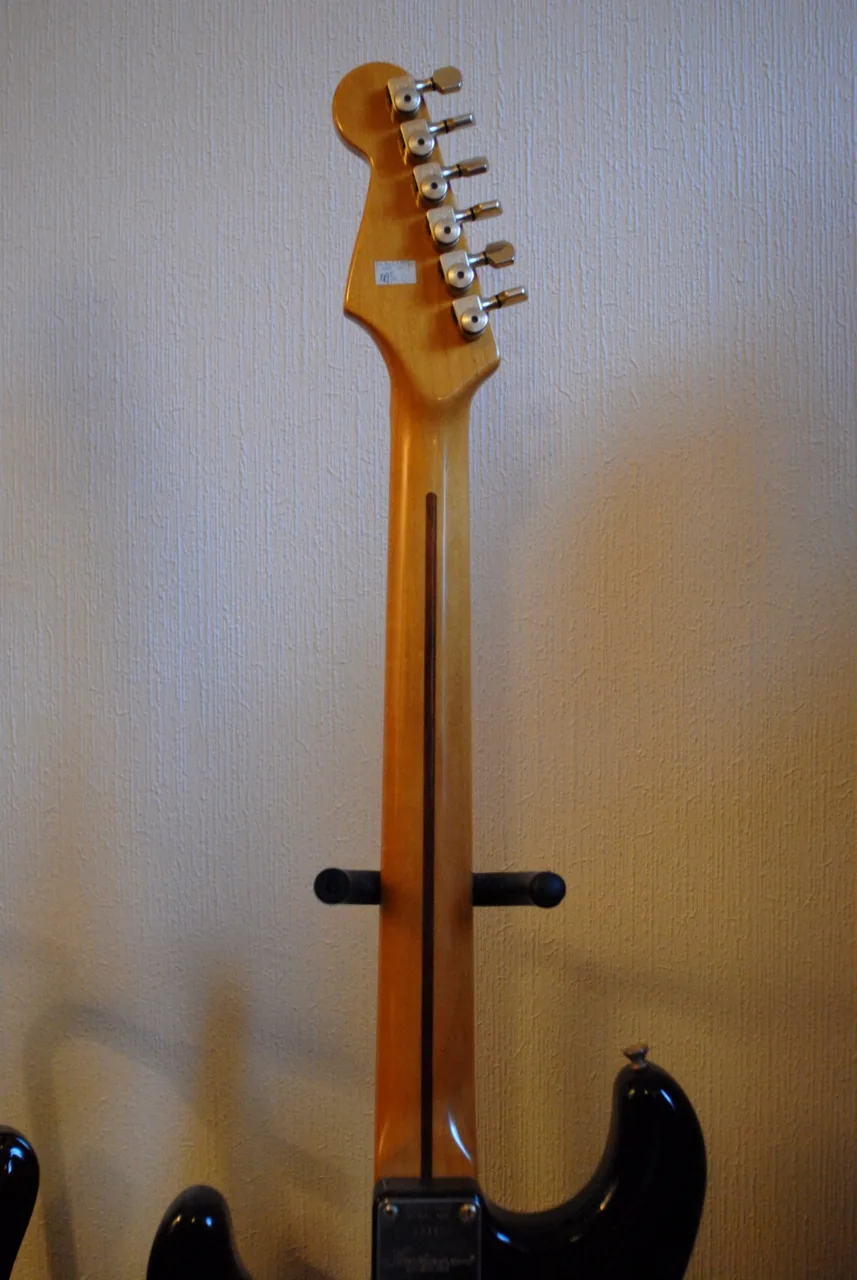
Cleaning and care tips for challenging humidity conditions
Clean the neck and fingerboard with a dry microfiber cloth to prevent residue from building up. In highly humid environments, use a hygrometer to help maintain suitable conditions. Check the nut and bridge adjustments periodically to compensate for changes in the wood’s dimensions. For more details on these adjustments, see our complete equipment care guide.
Regular maintenance helps prevent problems associated with neck wear, such as a lifting bridge or worn frets. These measures extend the instrument’s life and support a better playing experience.
Conclusion
The neck, a central part of the guitar, combines technical design and appearance to provide a rewarding musical experience. Careful wood selection, precise adjustments and attentive maintenance all directly affect sound quality and playing comfort.
Construction quality and material selection are decisive for the instrument’s longevity. Attachment techniques, whether neck-through, bolt-on or set-in, affect its sound. Fine adjustments to the frets and nut are also essential for accurate intonation.
Regular maintenance is indispensable to preserving these qualities. Consult a luthiery specialist for care tailored to your instrument. A well-maintained guitar is both a quality instrument and a lasting musical companion.
FAQ
What are the key features of a good guitar neck?
How should you choose a guitar’s string height?
Why is adjusting the nut important?
How do you care for a guitar neck?
What are the advantages of a maple neck?
How do you adjust a guitar’s action correctly?
How do strings affect playing comfort?
What are the basic steps in caring for a guitar?
What is the difference between a bolt-on and a set-in neck?
Source links
- https://www.metmuseum.org/art/collection/search/505307
- https://nashville.mi.edu/luthier-tools-learning-the-trade-of-guitar-craft/
- https://www.loc.gov/static/managed-content/uploads/sites/22/2024/06/AmericaWorks-Podcast_Season5_Episode1_transcription.pdf
- https://www.psu.edu/impact/story/that-martin-sound/


