This guide aims to help you buy a used handpan without rushing. It offers a clear, reusable method for reducing the risks of stolen photos and hidden defects.
What it covers: price benchmarks, assessing a listing, proof of authenticity, sound tests, physical inspection, a secure transaction and care after purchase.
The principle is simple: no guesswork. Every step should produce verifiable evidence—recent photos, videos, written answers and sound tests—rather than mere impressions.
This guide is for beginners seeking their first instrument, musicians looking for a particular model and cautious buyers in the used market.
A promising listing is not always a good deal: tuning, crosstalk and the instrument’s actual condition determine its value. Meeting in person remains the safest option, but a remote purchase is possible if the transaction is secure.
Below are practical checks to make before paying. For more information, see our guide to where to buy a used handpan.
Why buy a used handpan in France today?
For anyone who wants to start playing immediately, the used market remains the quickest option.
Availability and time saved: after periods when production took one to three months, or even years, buying used in France lets you avoid a long wait. If you want to play now, you may be able to receive or collect an instrument within days.
Savings and risks: depending on its condition, a used instrument can cost roughly 50% less. Those savings call for checks, however: tuning, authenticity, and the absence of corrosion or hairline cracks.
Rare models and patina: some makers have discontinued particular series. The used market can give you access to scales no longer produced and to distinctive sounds.
Patina can be an advantage: an instrument that has already been played may feel familiar right away. That can be revealing, but it must not distract you from unstable notes.
| Feature | Benefit | What to check |
|---|---|---|
| Availability | Start playing immediately | Proof the instrument is available and a recent video |
| Price | Savings of roughly 50% | Condition, tuning and history |
| Rarity | Access to scales no longer produced | Authenticity and maker |
In short: buying used appeals because it is quick and can save money, but it requires a method and careful checks. Before contacting a seller, learn how the current market works and where its pitfalls lie.
Understanding the current used handpan market
Since the Hang was invented, the market has become global and the range of instruments has grown considerably.
From the PANArt era to makers around the world
At first, there was only one recognized maker. Within a few years, many makers emerged around the world.
That growth increased supply and created substantial differences in quality, manufacturing methods and finish.
Why quality does not always match price
Price ≠ quality. A price may reflect reputation, rarity or marketing, rather than musical quality alone.
You may find an excellent instrument for around €1,200 and, in another case, a mediocre model for €2,500.
“Always listen before buying: tone, sustain and balance reveal more than the price tag.”
Learn to compare tone, sustain, dynamics and crosstalk. Measure the tuning and check the instrument’s condition.
| Factor | What it reveals | Recommended action |
|---|---|---|
| Maker | Method and reputation | Ask for evidence and the instrument’s history |
| Price | Reputation or rarity | Compare the sound and condition |
| Finish | Durability and care | Check for corrosion and dents |
Once you understand the market, it becomes easier to set realistic price benchmarks for your search.
Used handpan prices: realistic benchmarks for Le Bon Coin
Before contacting a seller, establish clear price benchmarks to avoid unpleasant surprises.
Typical ranges: most instruments cost between €1,200 and €2,500.
A new instrument may cost from €1,000 to more than €3,000.
In the used market, offers often range from €700 to €2,000, depending on the brand and condition.
What affects the price: the brand, model and cosmetic condition all play a major role.
Tuning stability, the rarity of the scale and accessories such as a case or purchase receipt can raise or lower the value.
A well-maintained instrument with documentation may retain a high price.
When a “bargain” should raise concerns: be wary of a price far below the market rate.
A refusal to provide a video, pressure to pay quickly or a lack of written evidence are warning signs.
Calculating the cost: include the cost of retuning and protection during transport.
You can then compare the offer fairly with the price of a new instrument. Before speaking with sellers, also decide what notes you need and how you will use the instrument.
Define your needs before contacting a seller
Before writing to a seller, decide exactly what you expect from your instrument. A clear goal will help you filter listings.
Use: decide whether you want it for relaxation, composition, rhythmic playing, accompaniment or performance. This choice affects which scale and register to prioritize.
Listening: watch plenty of videos with headphones to distinguish tone, sustain and harmonics. Phone speakers often hide defects.
- Select three to five scales you like.
- Write down three to five makers or models you have heard demonstrated.
- Always ask for the exact note list if it is missing.
The more specific your list, the more factual your questions to the seller can be: request a targeted video, a test of a particular note or a photo of the maker’s mark.
| Use | Recommended scale | Notes to prioritize |
|---|---|---|
| Relaxation / meditation | Open mode, pentatonic scale | Low and middle notes, long sustain |
| Composition | Modal or full scale | A variety of compatible semitones |
| Group playing | A scale compatible with a shared key | Avoid overly unusual scales |
Reliable seller or risky listing: signs to spot on Le Bon Coin
The details in a listing can sometimes tell you more than its asking price.
Before making contact, check the seller’s profile. A visible account history, several consistent listings and positive reviews can increase confidence.
A serious seller responds promptly, provides technical details and explains the reason for selling without dodging questions.
Profile, history and a consistent account
What to check: the instrument’s history, how it has been stored and proof of purchase. If the account matches the price and photos, that is a good sign.
Photos: essential angles
Ask for at least a top view showing the notes, a bottom view, photos of the edges and playing areas, and close-ups of scratches and the maker’s mark.
Video: what it should show
A good video demonstrates every note, sustain, soft and strong strikes, and a test that makes crosstalk audible.
“Ask for a note-by-note demonstration: the real sound reveals the instrument’s condition better than any photo.”
Simple ways to guard against stolen photos
To avoid scams, insist on a contextual photo: include a reference object such as a spoon, a dated piece of paper or a recognizable location.
Keep a written exchange summarizing the technical details and sale terms. It may serve as evidence if a dispute arises.
| Sign | What it may indicate | Recommended action |
|---|---|---|
| New account | Higher risk | Ask for proof of purchase and a video |
| Photos only | Photos may be stolen | Insist on a contextual photo |
| Technical answers | Seller reliability | Ask specific questions about the notes and maker |
| Very low price | Warning sign | Compare market prices and request evidence |
Used handpan: checklist before buying on Le Bon Coin
A methodical inspection substantially reduces the risk of a bad purchase.
Authenticity: ask for the maker’s name, exact model, a visible engraving or a certificate. Request a receipt or proof of provenance to confirm the brand and year of production.
Tuning: test each note with a tuner. Check its stability and confirm the reference frequency, 440 Hz or 432 Hz. Do not accept vague answers such as “it sounds fine”.
Crosstalk and balance: listen for interference between notes and identify any that sound muddy. Strike one note strongly, then check for vibration in other areas.
Physical condition and materials: inspect dents, hairline cracks, corrosion, edges and the rim. Ask whether the steel is nitrided and look for retouched or repolished areas.
History and accessories: record the production date, repairs, storage conditions and whether a bag or case is included.
| Item | What to check | Evidence required |
|---|---|---|
| Authenticity | Brand, model and engraving | Photo of the marking and receipt |
| Tuning | Stability of each note | Note-by-note video and a tuner check |
| Physical condition | Dents, corrosion and hairline cracks | Detailed photos of vulnerable areas |
| Accessories | Bag, receipt and history | List and photos of documents |
Before paying: obtain at least a convincing video, complete photos and written answers. If you cannot meet in person, follow a secure procedure and consult resources such as where to buy a handpan to compare options.
How to test a handpan like a pro, even as a beginner
Testing an instrument calls for a simple, repeatable method so you can compare sounds objectively.
Test procedure: order, intensity and sustain
Start with the center note, then play the notes in the same order each time. Strike each one with the same intensity to make your comparisons meaningful.
Let each note ring until it fades to assess its sustain. Listen for abrupt drop-offs, unusual beating and unstable harmonics.
Dynamics and crosstalk test
Strike each area softly, then more strongly. Check that the instrument remains musical and does not distort under a strong attack.
To test crosstalk, play two adjacent notes in succession. Listen for unwanted vibration or a note that sounds muddy.
Compare and keep a record
Listen with headphones to audio or video examples in a similar scale to reduce the effect of first impressions. Record a short excerpt if the seller agrees, then listen again later or share it to get another opinion.
Remember: good quality lies in the consistency of the whole instrument—balance, tuning and sustain—not in one beautiful note. To complete your checks, also read about the pitfalls to avoid.
Meeting in person: the safest option
There is no substitute for direct contact: seeing the instrument in person reduces uncertainty.
Check that the seller actually has the instrument
Ask the seller to show the instrument from the same angles as in the listing. Confirm that the stated accessories and, if available, the receipt are present.
Confirm how it sounds in person
A video can mislead: the room, microphone and editing affect what you hear. Listen to every note in person and compare it with your reference recordings.
“A sound that captivates you on video may lose its magic when you hear it in person.”
Practical advice for a relaxed test
Choose a quiet place with little reverberation. Allow 15 to 30 minutes to test all the notes and the instrument’s dynamics.
Do not pay until you have finished testing. Keep a written exchange summarizing the instrument’s condition and provenance.
| Goal | Action | Time |
|---|---|---|
| Possession | Compare the instrument with the photos and video | 5 to 10 min |
| Sound | Test every note, softly and then strongly | 10 to 15 min |
| Transaction | Check accessories and documents; keep a written record | 5 min |
If meeting is impossible, secure the remote purchase with a strict procedure. To learn how to identify a quality instrument, see our guide to recognizing a well-made instrument.
Buying remotely on Le Bon Coin: securing the transaction
For a remote purchase, evidence matters as much as price. First ask the seller for clear information: maker, model, reference frequency (440 Hz or 432 Hz), exact condition and reason for selling.
Ask for a written summary in the Le Bon Coin conversation thread: the note list, accessories and an agreed description of the instrument’s condition. These messages can serve as evidence in a dispute.
Request a complete set of evidence: a video of all the notes, photos from several angles and a dated contextual photo. Check that the seller can ship the instrument with insurance.
Packaging, shipping and delivery
Specify the packaging you expect: a bag or case, padding against shocks, two boxes and protection for the dome. Have the seller confirm that the parcel will be marked “fragile.” Include shipping and insurance in the final cost.
When it arrives, film yourself opening the package, inspect the instrument and test every note. Report any damage immediately. Resist pressure to pay quickly, and do not pay while important details remain unclear.
| Stage | Action | Purpose |
|---|---|---|
| Questions | Maker, model, frequency and history | Verify provenance |
| Evidence | Note-by-note video and dated photos | Avoid scams |
| Shipping | Bag, padding, two boxes and insurance | Reduce the risk of impact damage |
| Delivery | Film, test and report damage | Preserve your options for recourse |
Retuning and after-sales support: plan ahead before paying
Allowing for the cost of retuning can change your final decision. A small audible defect may mean extra expense and reduced playing quality.
Signs of poor tuning and their effect on value
Listen for beating notes, pitch that changes with playing intensity or unusually short sustain.
These symptoms reduce the instrument’s value and playing enjoyment. A poorly matched set of notes can make group playing impossible.
Indicative budget and professional retuning times
A full retuning generally costs around €150 to €400, depending on how serious the problem is. Rates vary by workshop and manufacturing method.
Allow time for an appointment, possible shipping and the period when the instrument is unavailable: this may take from a few days to several weeks.
Why to avoid DIY repairs
Amateur hammering, heating or abrasives can deform the shell and complicate long-term care.
Choose a professional experienced with handpans and check whether the maker offers after-sales support: it may remain available for years and offer particular terms.
A simple rule: if the seller reports a tuning problem, request a repair estimate and negotiate the price before the purchase, never afterward.
| Issue | Action | Indicative cost |
|---|---|---|
| Beating notes | Rebalance the notes individually | €150 to €300 |
| Widespread tuning problems | Full retuning | €250 to €400 |
| Structural repairs | Diagnosis at a specialist workshop | Varies; request a quote |
Where else to look besides Le Bon Coin to compare and verify
Comparing listings on other platforms helps you judge an offer against the market.
Specialist platforms: look at places where enthusiasts sell to one another and sites that list makers. These platforms sometimes show an instrument’s history and make the sale easier to trace.
Forums and listings among enthusiasts
“Swap and sale” forums and dedicated Facebook groups bring together sellers known to other players.
They often offer firsthand feedback about a brand or model and warn members about counterfeits.
How to ask for useful feedback
Post the scale, note list, maker, a short video, price and stated condition.
Ask specific questions, such as “Does this note beat?” or “Who exactly made it?” rather than “What do you think?”
Check the brand with the community
Some brands have a consistent reputation; for others, quality varies considerably between series.
Ask whether anyone knows the seller, whether the model has been sold before and whether copies exist.
| Source | Benefit | Recommended action |
|---|---|---|
| Forums and groups | Quick opinions and transaction histories | Post a video and the note list |
| Specialist platforms | Maker profiles | Compare prices and models |
| Local community | Knowledge of sellers’ reputations | Ask for personal references |
“A community can reduce gaps in information, but it can never replace trying an instrument in person.”
Once you have gathered feedback and compared prices, you will be better prepared to negotiate.
To complete your research, see our guide to finding an instrument for sale near you.
Negotiate the price with confidence
A sound offer reflects the instrument’s actual condition and verifiable costs. Present yourself as a serious, well-informed buyer. Show that you have checked the notes, photos and video.
Make your case using condition, tuning and accessories
Start by listing the weaknesses you have observed: unstable notes, crosstalk, corrosion or visible dents. Add missing accessories, such as the bag or receipt, which reduce the value.
Practical approach: describe each defect and propose a specific reduction. For example, deduct €X for estimated retuning and €Y to replace the bag.
Include potential retuning costs in your offer
Find out what professional retuning costs locally; it may run to several hundred euros. Include that amount in your calculation and explain it to the seller.
Remain courteous and express your willingness to complete the purchase, but make it conditional on verifiable evidence, such as a note-by-note video and a written exchange.
If the seller refuses tests, gives inconsistent answers or pressures you to pay immediately, it is better to walk away.
| Reason | Action | Expected result |
|---|---|---|
| Beating notes | Calculate the cost of retuning | Proportionate price reduction |
| Missing accessories | Add the cost of a bag or case | Adjusted offer |
| Seller refuses tests | Do not send money | Walk away or meet in person |
Offer a small deposit only if you have arranged to meet. Otherwise, avoid paying anything in advance outside a secure arrangement. After the purchase, regular care will help preserve the instrument’s stability and resale value.
After purchase: care and habits that keep a handpan stable
Good care helps your instrument stay stable and enjoyable to play. A few simple habits, repeated regularly, are enough to help preserve its tone and tuning.
Cleaning, rust prevention and dry storage
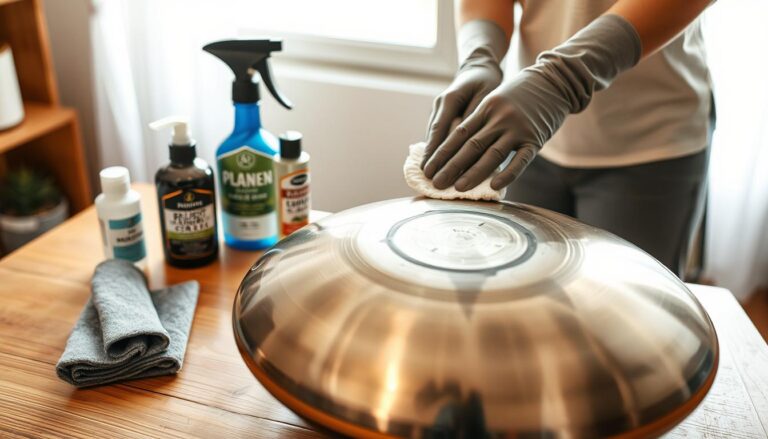
Wipe the instrument with a soft cloth after every session to remove fingerprints and moisture.
Apply a protective product suited to the metal and finish, following the maker’s recommendations. Avoid damp cellars and hot car trunks: store the instrument somewhere dry with a moderate temperature.
Transport: a sturdy bag and everyday precautions
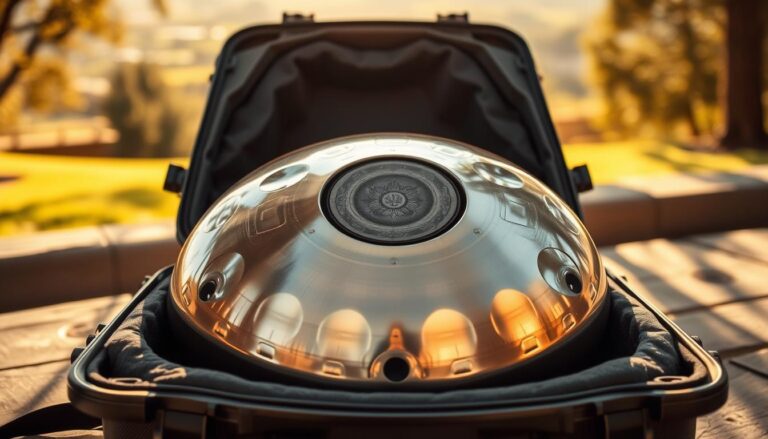
Use a padded bag or a hard case. Secure the instrument so it cannot move, and never place heavy objects on it.
When travelling, protect its edges and rim from impacts. Good packaging reduces the risk of knocks affecting the tuning.
How often to check and retune it
Make a brief monthly check of the pitch and sustain of every note. If you play often or travel, make a more thorough check every three to six months.
Record the instrument’s condition with photos and a video the day after purchase so you can track any changes. A well-maintained instrument retains its value on the used market and remains enjoyable to play.
Conclusion
Base your buying decision on evidence, not on an attractive photo.
Three priorities to remember are the maker’s authenticity, the sound—tuning, crosstalk and balance—and the physical condition. Together, they determine the instrument’s real quality.
To reduce the risk of scams, insist on photos and a contextual video, check that the seller’s account is consistent and, if possible, arrange to collect the instrument in person.
Calculate the total cost, including possible retuning, protection for transport and the time needed to compare offers. If you are unsure, ask the community or an experienced musician for an outside opinion.
If essential evidence is missing, do not complete the sale: waiting a few months is better. For other ideas, see our article on where to find an affordable instrument.