Why is this search so common in France?
The market for this instrument is growing rapidly. Many people want to buy online. This demand attracts unreliable offers.
For a quality nine-note model, expect to pay an average of €1,200 to €2,500. A listing below €1,200 should raise concerns: the materials and finish are often of lower quality.
This guide aims to help you buy with confidence. It offers a simple method: read the product listing, check the seller, then examine the technical specifications (materials, tuning, stability).
Here you will find an Amazon-specific checklist, common scam scenarios (stolen photos, payments outside the platform), and safer alternatives: makers, specialist websites and shops.
Our promise: by the end, you will know how to distinguish an authentic instrument from an imitation and choose the option that best suits your budget and needs.
Why does buying a handpan on Amazon appeal to so many people in France?
Access to international offers and their visibility explain the appeal of marketplaces for many buyers. Being able to compare offers in real time strongly influences purchasing decisions and creates an impression of transparency.
Perceived advantages:
- Visible stock and fast, tracked delivery, which provide reassurance that the order will arrive.
- Standardized return policies and immediate comparison of prices.
- Access to makers around the world without having to travel.
According to Handpan-store, online sales have risen by 30% since 2022, confirming that buying online is becoming more widespread.
Platforms combine products sold directly with offers from third-party sellers. Quality and service can therefore vary more widely.
The user experience remains simple: click, pay, track. However, specialist advice is often lacking for instruments whose tuning requires particular attention.
Keep in mind: immediate availability and the “best price” are not enough. For a safer purchase, also consider specialist websites and retailers that offer inspections, demonstrations and warranties.
Handpans on Amazon: how to spot a genuine handpan and its imitations
A quick check of a listing’s technical information helps protect you from misleading offers.
Start by distinguishing the instrument families. A tuned acoustic handpan has hammered or pressed note fields. By contrast, a steel tongue drum has cut tongues and produces a simpler tone.
The term “hang drum” is often misused in listings to attract buyers. It guarantees neither the origin, the manufacturing method nor the stability of the tuning.
Warning signs in the product listing
- No specific brand or model.
- No indication of the number of notes, scale or frequency (440 Hz or 432 Hz).
- Vague descriptions such as “heavenly sound,” without technical details.
- Generic photos, the same images across several listings, or no audio or video recording.
- No serial number or clear warranty and after-sales service policy.
What a reputable seller should show
A reliable listing states the brand, exact model, scale, number of notes, material and tuning used.
Asking for videos of the instrument being sold and its serial number makes it easier to verify with the maker.
Once you can distinguish genuine instruments from imitations, you need to understand prices and technical criteria to avoid unpleasant surprises.
Understand the price of a quality handpan before clicking “Buy”
Before buying, knowing typical prices helps you quickly rule out questionable offers.
Typical prices in France and Europe: a seven-note instrument generally sells for €990 to €1,500. A nine-note model often costs €1,500 to €2,500. The commonly used warning threshold is €1,200: be cautious below this price.
The price rises quickly because making the instrument takes time and skill. Allow around 80 hours for shaping, heat treatment and fine-tuning each note.
- Illustrative cost breakdown: nitrided steel: around 40%; labor: around 35%; R&D: around 15%.
- One study reports tuning defects in up to 62% of certain low-cost models.
| Component | Impact on cost | What you are paying for |
|---|---|---|
| Material (nitrided steel) | High (around 40%) | Durability, stable tone |
| Labor | Medium (around 35%) | Shaping, hammering, manual tuning |
| Quality control and R&D | Low to medium (around 15%) | Long-term stability |
Realistic discounts: discontinued models, display models or accessory bundles. Permanently available too-good-to-be-true deals, an unknown seller or missing technical details should raise concerns.
Simple rule: if the price is far below typical levels, insist on a video, a serial number and information about the maker.
To find safer alternatives, consult this list of reputable makers. The next section explains the technical criteria to check.
The technical criteria for a “real” handpan: quality, materials, notes and tuning
A basic inspection covers the materials, number of notes, tuning and stability. These factors explain differences in sound quality and durability.
Nitrided steel or stainless steel
Nitrided steel offers excellent corrosion resistance and a warm tone. It is common in durable instruments.
Stainless steel offers a different tonal character and requires less rust prevention. The choice depends on how and where you will use the instrument.
Number of notes and ease of playing
For beginners, a range of eight to ten notes makes learning easier. It provides enough melodic possibilities without excessive complexity.
440 Hz or 432 Hz: which should you choose?
440 Hz tuning makes playing with others easier. 432 Hz remains a personal choice, often associated with meditation.
Consistent tuning across the whole instrument matters more than the frequency you choose.
Note stability
Good quality means the notes do not drift after a few weeks. You should be able to assess the sustain, harmonics and consistency between notes.
Ask for a video in which every note is played with a tuner visible so you can check the tuning.
| Criterion | What it indicates | What to check |
|---|---|---|
| Materials (nitrided or stainless steel) | Durability and tonal character | Detailed photo, description of treatment |
| Number of notes | Ease of playing and melodic range | Eight to ten notes recommended for beginners |
| Tuning stability | How well tuning holds over time, need for retuning | Video with tuner, warranty |
To find reliable makers and quality checks, consult this list of reputable makers before buying.
An Amazon checklist for evaluating a listing and seller
Before checking out, carefully reading the listing helps you avoid paying for a poorly described instrument.
“Sold by” and “Dispatched by”: read between the lines
Check who appears under “Sold by.” A third-party seller may use the platform’s fulfillment service without guaranteeing the instrument’s authenticity or tuning.
How to assess customer reviews
Favor reviews that mention the tuning, finish, note stability or the instrument’s condition on arrival.
Ignore overly general comments; look for reviews written by musicians or customers who provide details.
Photos, videos and proof of authenticity
Insist on recent videos of the exact model showing every note and close-ups of the finish.
Serial number and traceability
Ask for the serial number. If the brand is known, contact the maker to confirm the instrument’s history.
Returns, warranty and after-sales service
Check the time limits, who pays for returns and whether a retuning service exists. These checks help prevent unpleasant surprises.
Common scams and unpleasant surprises: how to avoid them online
Online scams evolve: you need to learn to spot them quickly. Certain recurring signs can help you anticipate them.
Misleading photos: how to check them
Scammers reuse photos of authentic instruments to deceive buyers. Run a reverse image search on Google. Be wary if the same photo appears in multiple listings or on older websites.
Too-good-to-be-true offers and false urgency
Prices far below typical market levels and stories about a “limited edition” create a sense of urgency. This tactic can conceal a lack of technical information.
Risky payments
Refuse any request for direct payment (Western Union, cash). These methods limit your options if a dispute arises and are a major warning sign.
Copied listings and sellers with no history
If the same text and photos appear on several platforms, the seller has no reviews, or the video links do not work, ask for further proof.
A practical precaution: insist on a recent video in which every note is played and a dated item, such as that day’s newspaper, is visible. This helps show that the seller has the instrument and makes verification easier.
Final strategy: for a substantial purchase, favor better-vetted websites or established retailers. This reduces the risk of unpleasant surprises and makes buying online less stressful.
Amazon, specialist websites and music retailers: which option offers the most confidence?
Choosing the right place to buy often makes the difference between satisfaction and disappointment. General marketplaces offer a wide selection and sometimes attractive prices, but they also receive more complaints.
What specialist websites offer
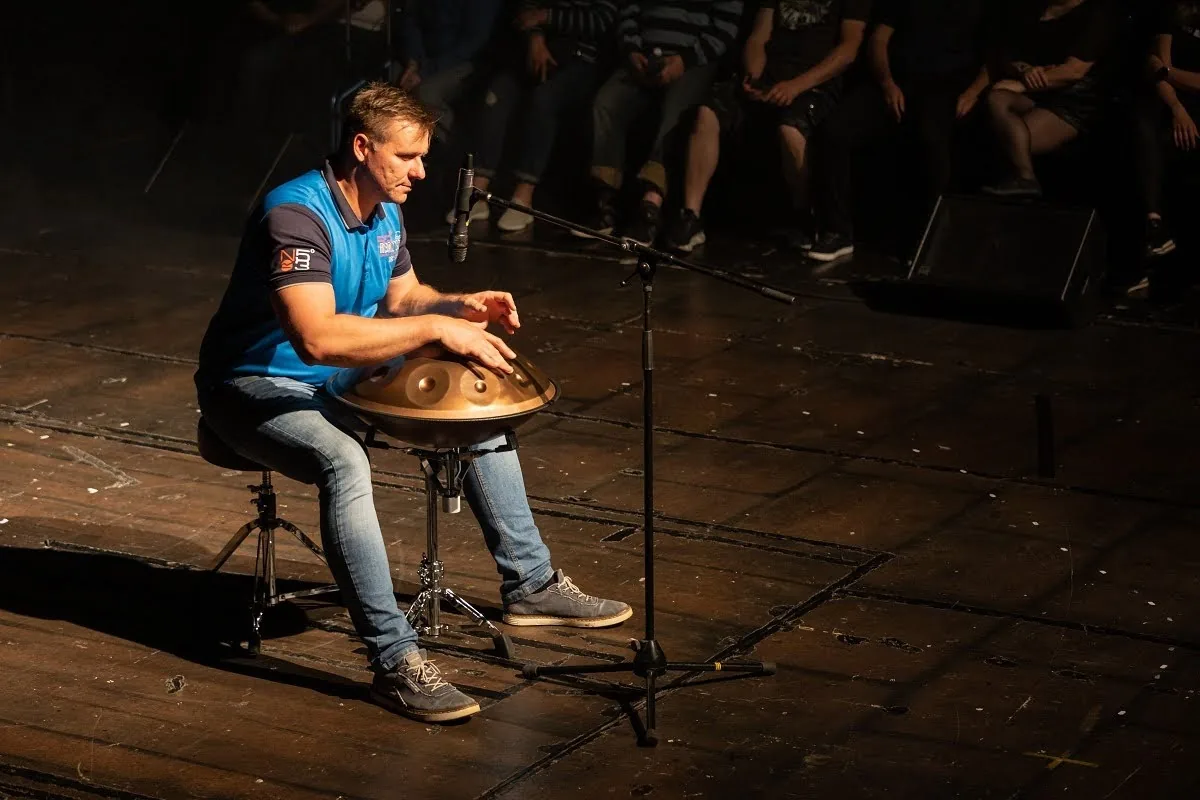
Specialist websites check quality, publish demonstration videos and offer genuine after-sales service. Their complaint rate is much lower (around 6%).
Why trying one in a shop changes everything
In a shop, you can test the tuning, resonance and condition of the shell. Playing it yourself reveals the harmonics and sound quality better than a product listing.
Risks of general marketplaces
These marketplaces carry offers from many sellers and models that may not be certified. Their complaint rate is higher (around 27%). Always check the reviews, seller and evidence provided (video, serial number).
Practical advice: choose a marketplace only if the seller is identifiable, provides demonstration videos and offers straightforward returns. Otherwise, favor a specialist website or retailer.
For a quick comparison, also consult recommended websites that identify reliable retailers and offer buying advice suited to your budget and needs.
Buying a handpan directly from a maker: the safest option
Buying directly from a workshop often provides greater clarity and less risk. Contact with the maker helps with traceability, after-sales support and instrument customization.
Benefits of buying directly
Customization: choose the scale, frequency, finish and adjustments that suit your playing style.
Manufacturing transparency: the maker explains the materials, method and quality checks.
Reliable after-sales service: extended warranties (for example, three years at Metal Sounds) and retuning handled by the maker.
Essential questions to ask
- What exactly is the material, and what treatment has it received?
- What manufacturing methods and quality checks are used?
- How stable can I expect the tuning to remain over time?
- What are the retuning arrangements and warranty period?
- What are the production times and return conditions?
Lead times, delivery and logistics
Allow for a realistic production time: often several weeks, depending on the maker’s workload.
Delivery generally uses reinforced packaging. Account for charges and customs procedures if the maker is outside the European Union.
Tip: if a listing mentions a known brand, always check whether you can buy directly from the maker or through an authorized retailer so you can compare the total cost.
Buying a used handpan: a bargain or a trap, depending on the circumstances
Buying used can sometimes get you a better-made instrument on a limited budget.
When buying used makes sense: you may find a higher-quality instrument at a reduced price. A well-maintained instrument whose tuning has remained stable for several years is often worth the investment. The average loss in value is around 25% after two years of use.
Where to look for reliable used instruments
- Moderated communities: specialist Facebook groups and HandPan.org.
- Platforms that show profiles and seller history, rather than unmoderated classified ads.
- Favor sales with supporting evidence and traceable communications.
Essential checks before buying
Inspect the instrument’s condition: rust marks, dents, hairline cracks and the condition of its coating. If possible, look inside through the gu.
Test every note with a tuner to check the tuning and consistency of the scale.
Make the transaction safer
- Ask for recent videos showing all the notes, ideally played by the seller.
- Ask for its history: brand, model, scale, years of use and serial number.
- Favor an in-person handover with a chance to play it; otherwise, insist on dated proof and protected payment.
If the listing is vague or a marketplace resale lacks transparency, contact the maker to confirm the instrument’s authenticity.
To learn more about checking an instrument’s quality, also read this article on how to recognize a quality handcrafted instrument.
Conclusion
To conclude, remember the benchmarks that help protect your purchase.
A good instrument generally costs at least €1,200; a nine-note model often costs between €1,200 and €2,500. Below €1,200, pay particular attention to the price and traceability.
Check the product listing (brand, model, scale, tuning), request high-resolution photos and a recent video, read useful reviews and confirm the return conditions.
Favor buying directly from the maker, followed by specialist websites or a shop where you can try the instrument. Refuse risky payment methods and contact the maker if a serial number seems suspicious.
Practical advice: compare two or three models, listen to demonstrations and follow this guide to buy a handpan with confidence. To understand why very cheap offers deserve caution, read this article on the risks of low-cost offers.
Our promise: with this guide, you can make a reliable choice, protect your budget and obtain lasting sound quality so you can fully enjoy this instrument.