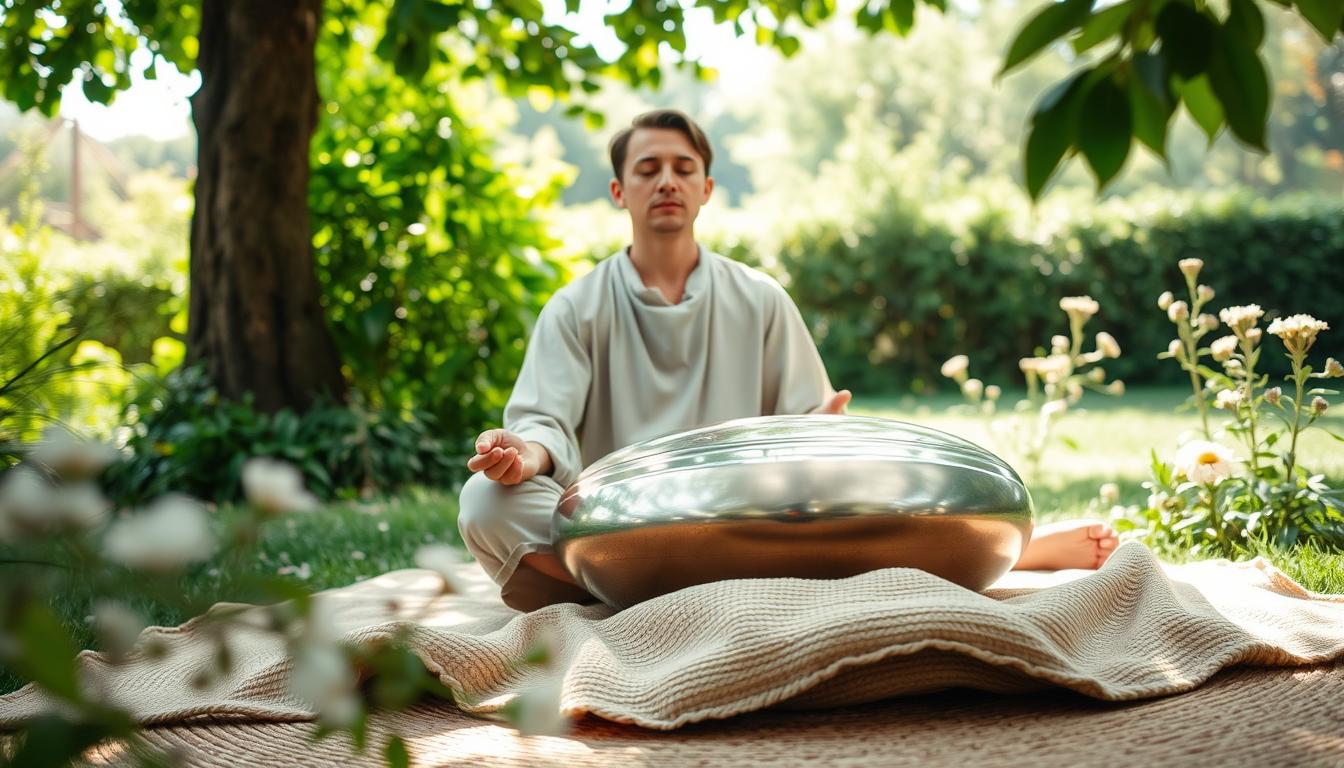
Discovering a relaxation tool for deep relaxation begins with small practices. The handpan helps you reconnect with yourself through its harmonics and repeated notes.
This guide is for beginners and experienced players alike. It offers a simple, step-by-step approach to using gentle rhythms, guiding the breath and setting a clear intention.
Why it works: rich harmonics and vibrations can feel like a sound massage. Repeated sounds calm the mind and support physical well-being.
You will find practical advice on preparing your space, choosing a suitable scale and carrying out a complete session. To explore the spiritual dimension and frequencies in more detail, read the guide to spirituality and the handpan.
A note of caution: this instrument can support mental well-being, but it does not replace medical advice for severe anxiety or sleep disorders.
Why the handpan encourages meditation and deep relaxation
The sounds of this instrument create space for presence and relaxation. Its gentle metallic tone, rich in harmonics, creates a steady, enveloping atmosphere that invites inner exploration.
A tone that guides attention
The sounds create a texture much like a mantra. Repeating simple notes helps the mind settle and reduces rumination.
Vibrations and bodily sensations
Vibrations are often felt in the chest, abdomen or hands. This sensory contact encourages the body to relax gradually.
Effects on the nervous system
Harmonious tones can feel like a “sound massage”: they soothe the nervous system and help reduce stress and anxiety.
Repetition, grounding and mindfulness
A simple rhythmic pattern and a recurring note become anchors for awareness. For example, play four gentle strikes on the central note, pause, then notice how your attention returns to the sound.
To deepen your practice and find ideas for yoga or sound therapy, read a practical guide to sound accompaniment.
Preparing your space and body for a meditative handpan session
Before you begin, arrange a simple space that invites calm. A tidy, lightly ventilated room without notifications makes it easier to establish a lasting practice.
Creating a peaceful atmosphere
Reduce distractions with warm light, a candle or mild incense if you tolerate it. A blanket, mat and cushion are enough to create a sanctuary at home.
- Listen to the silence for 30 seconds, then play one gentle note to mark the beginning.
- Start with short sessions, and try recordings if you do not play the instrument.
Posture, comfort and grounding
Sit steadily on a cushion, or lie down if you are listening. Keep your neck long, your jaw relaxed and your hands at ease.
Feel where your body meets the ground, through your pelvis or feet, to steady your concentration. This grounding supports balance in body and mind during practice.
Setting a simple intention
Form a short sentence in the present tense: “I slow down” or “I return to myself”. Choose a focus: the sound, your breathing or a vibration in your body.
Tip: this step refreshes the atmosphere and turns playing the instrument into a welcoming ritual that can lead to a deeper state.
Choosing the right handpan and sounds for meditation
Choosing a suitable instrument can greatly affect the quality of a session. Its quality influences how long notes resonate, how clear the harmonics are and whether any harsh notes interrupt relaxation.
Quality and simple criteria
Check that the notes have a consistent volume. Listen for unwanted vibrations and test how the instrument responds to touch.
Criteria: consistent sustain, clear harmonics and comfortable playing.
Scales and moods
Lower tones encourage a sense of grounding and stability. Brighter notes can create a feeling of openness and lightness.
Choose according to your intention: grounding or opening the heart.
Listening or playing
Listening makes it easier to let go quickly. Gentle playing calls for active presence and strengthens the balance between body and mind.
- Short break: listen with headphones for 10 to 20 minutes.
- In the evening: play slowly and gently to release tension.
| Criterion | Benefit | How to test it |
|---|---|---|
| Length of resonance | Steady, sustained sound | Strike a note and time how long it takes to fade |
| Harmonics | Rich sound without harshness | Listen closely to the middle notes |
| Playing comfort | Consistent response to touch | Try several light strikes |
To explore the connection between sound and practice, read this guide to spirituality.
Handpan meditation: slow rhythms, breathing and intentions
Short practice (10 to 15 minutes): begin in silence (30 seconds), play a few welcoming notes, settle into a steady rhythm, synchronize your breathing, visualize your intention and close with silence (30 to 60 seconds).
Starting with a slow rhythm
Choose one or two notes and play a widely spaced beat, like a gentle metronome. Leave silence between strikes so each note can resonate.
Synchronizing breath and beat
Breathe in over two or three strikes and out over three or four. Do not force it: let your breathing lengthen with the notes.
Directing awareness toward vibrations
As each note resonates, notice one area of your body, such as your shoulders, abdomen or jaw. Release a little tension with each note, letting go of what has built up.
Visualizing your intention as a wave
Imagine a vibration spreading from the center of your chest with each sound. This image can help you maintain a calm state.
Closing gently
Slow the strikes and space them farther apart, then sit in silence for 30 to 60 seconds. Close with this sentence: “I carry this calm with me”.
| Phase | Duration | Action | Purpose |
|---|---|---|---|
| Opening | 30 seconds | Silence, then a welcoming note | Settle your attention |
| Main practice | 8 to 12 minutes | Beat, synchronized breathing, visualization | Release tension and encourage relaxation |
| Closing | 30 to 60 seconds | Slow down, pause in silence, say a closing phrase | Absorb the state you have reached |
Slow rhythms and breathing: simple ways to calm the mind
A measured beat is often enough to bring the mind back to the present moment.
The main principle: a gentle tempo and moments of silence deepen calm more than complex playing does.
Tempo, space and silence
Try these three easy tempos:
- Very slow: notes spaced far apart for grounding.
- Slow: a steady beat to stabilize concentration.
- Floating: a free, unhurried rhythm to open up the practice.
Silence technique: leave two or three seconds after each musical phrase so the lingering sound can give way to stillness.
Slow, regular breathing
Try this basic pattern: breathe in for four beats and out for six. If it feels uncomfortable, return to your natural breathing.
Matching your breath to the sound can support relaxation and help calm the nervous system.
Points of focus
Choose a simple focus:
- A central note as an anchor.
- An area of the body, such as the solar plexus or abdomen.
- A sensation, such as vibration or warmth.
“When your attention wanders, return to the next sound, then to the feeling of your body against the floor, without judgment.”
A short sequence to repeat: 3 minutes at a slow tempo + 1 minute of silence + 3 minutes of guided breathing + 1 minute of silence.
To explore these practices in guided sessions, see the available workshops.
Frequencies, energy and symbolism: understanding the differences
Tuning choices subtly influence the character of the sound and how you perceive it during practice.
432 Hz and 440 Hz: what tuning means
432 Hz and 440 Hz are tuning references. Some people find 432 Hz warmer. Tuning to 440 Hz remains the international musical standard.
What you may notice is a difference in the overall sound, tone and way a note affects you. It is a listening reference, not a promise of healing.
Symbolic frequencies: using numbers as reminders
The numbers 111, 528, 639, 777 and 1111 are often used as symbols of intention. They do not represent the instrument’s physical tuning.
A practical approach: choose a number associated with a theme, such as 528 for transformation, form a short sentence, then play slowly while keeping that theme in mind. Use the idea as a thread running through your practice.
“Intention and wave” exercise: imagine a wave starting at the center, passing through each note and widening.
Chakras and sensation: playing mindfully near a chosen area
Choose an area, such as your abdomen, chest or forehead. Move the instrument closer or farther away according to the intensity you want.
Notice what you feel, observe any changes and adjust the volume. If you encounter claims of a “miracle,” return to your breathing and bodily sensations as reliable points of reference.
| Element | Use | Simple action |
|---|---|---|
| Tuning to 432 or 440 Hz | Sound character | Try 5 minutes at 440 Hz, then 5 minutes at 432 Hz, and note what you feel |
| Symbolic numbers | Theme for an intention | Form a short sentence and play slowly |
| Chakras | Chosen area | Place the instrument nearby, listen and adjust the distance |
Bringing the handpan into yoga, yoga nidra and sound therapy
Subtle sound accompaniment can strengthen grounding and support flowing movement without taking over.
Practical advice: keep the volume low, favor simple phrases and prioritize participants’ breathing.
Good moments to play include the beginning, to help people center themselves; transitions, to guide breathing; and final relaxation (savasana), to encourage rest.
For yin yoga, play long, steady notes with few changes and plenty of silence to support letting go. In vinyasa, follow the breath and sequence of movements with gentle accents during transitions, without speeding up enough to stimulate the group.
In yoga nidra, favor very simple, repeated patterns. Leave plenty of space between strikes and support the guide’s voice without covering it.
In sound therapy, vibrations may help people explore emotions and regain a sense of inner balance. Remember that the practice supports well-being but does not replace medical care.
In practice: try a 10-minute session, ask for feedback, adjust the pitch range (lower for a more grounded feeling) and use quality recordings if you are not playing live. Consider collaborating with a musician to keep the sound coherent.
Conclusion
Start gradually: use few sounds and give them your full attention. Five key points to remember are a measured tempo, calm breathing, a clear intention, a pleasing tone and regular sessions.
You can play to stay actively engaged or listen to let go. Each offers a way to support well-being.
Symbolic frequencies can serve as reminders, provided you distinguish them from tuning and promises of results. A few repeated notes, moments of silence and attention to your body can help ease tension.
Try practicing for 10 minutes a day, adjusting the scale and time of day to suit you. Add the instrument to a routine, such as an evening break, a gentle yoga session or the time before sleep, to make the practice a lasting habit.