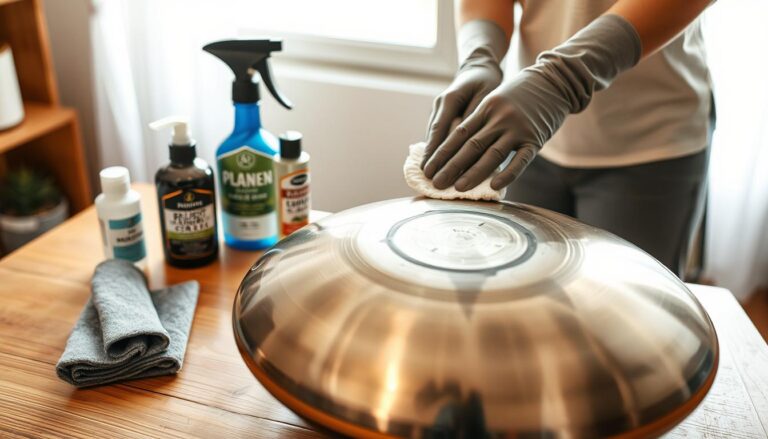
Updated September 8, 2025. This detailed guide, kept up to date since 2016, aims to explain the instrument before comparing prices and offers.
Goal: help beginners and curious musicians avoid impulse purchases, misleading bargains, and purely decorative pieces.
We will describe what this tuned acoustic instrument is, its terminology and how it is made, then explain the criteria for judging its quality. You will learn how to test one and buy with confidence.
Recurring criteria: tuning, tone, sustain and decay, balance, crosstalk, playing comfort, and the maker’s traceability.
Watch out for names used incorrectly (Hang, hang drum, pantam…). The question of terminology is explained below.
For more information, see a comprehensive resource that avoids clickbait at Sala Muzik.
Why the handpan fascinates musicians and beginners alike
An intuitive instrument makes it easy to start playing within minutes. Often built around a diatonic scale, it lets you improvise without knowing music theory. The note layout guides your hands, and pleasing musical phrases come quickly.
Both percussive and melodic. You strike it like a percussion instrument, but every strike produces a tuned note. This combination creates a sound that is both rhythmic and melodic.
Common uses include playing solo at home, relaxation, accompanying yoga or meditation, composing, and jamming with other musicians. You can play with your hands or with mallets, depending on the effect you want.
Who is this guide for in France?
It is for people who cannot read music, percussionists looking for a new tone, first-time instrument buyers, and curious musicians. We also cover the community, including workshops and events, to help you try instruments and progress faster.
Beware of falling for an instrument online: a video can flatter an instrument through good recording or hide its faults. This guide helps you make a realistic choice based on scale, number of notes, material, and tuning instead of chasing “the best” instrument.
| Use | Intended player | Main benefit |
|---|---|---|
| Solo playing / relaxation | Beginners, music lovers | Quick access to a soothing sound |
| Accompaniment (yoga) | Wellness practitioners | Enveloping tone, controlled sustain |
| Jamming / composing | Musicians, percussionists | Rhythmic and melodic versatility |
Handpan: understanding the instrument and its unique sound
Here is a simple definition to help you recognize this family of idiophones and avoid confusion.
What this kind of idiophone is, and what it is not
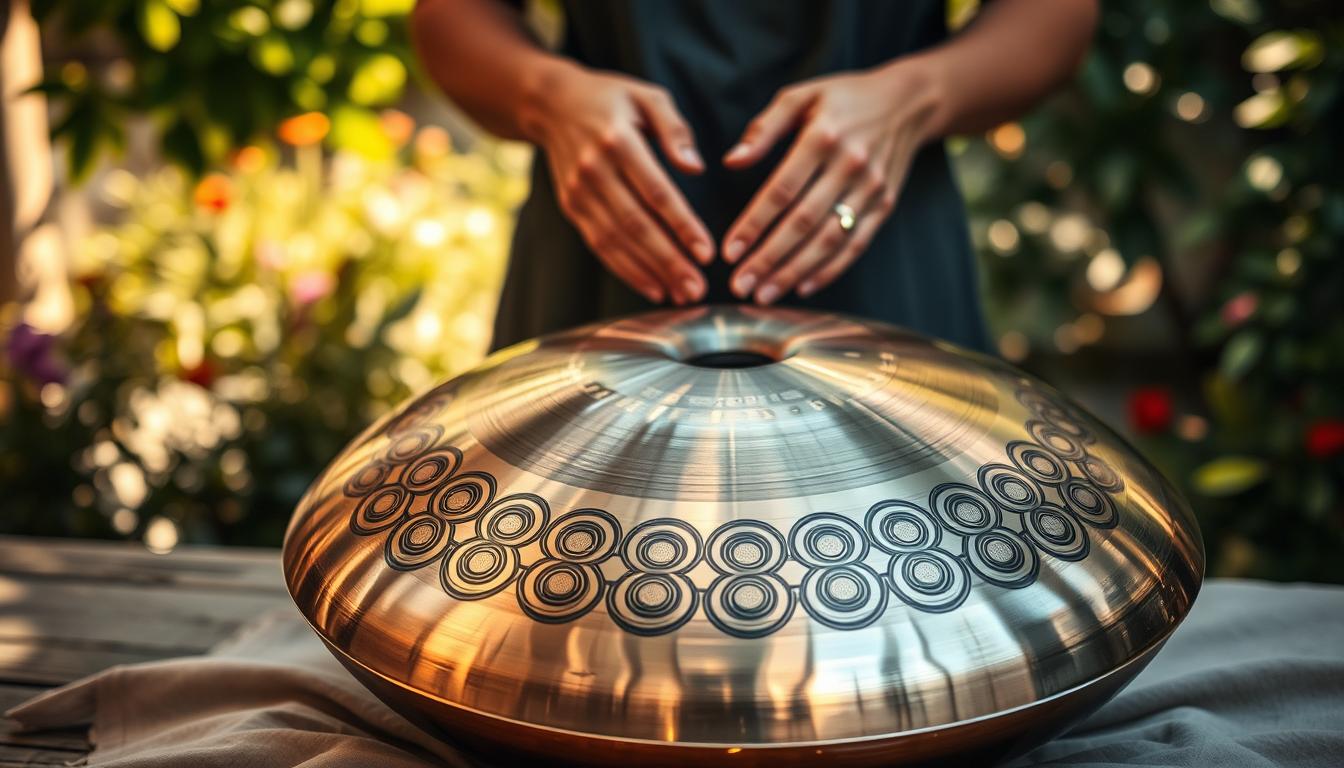
A handpan consists of two joined steel shells. It belongs to the idiophone family. A central note, the ding, is surrounded by several tuned notes.
Unlike a steelpan or a decorative object, each playing area produces a distinct note with harmonics. If the piece is not tuned, it is not a proper musical instrument.
Origins and name
The first handpan appeared in Switzerland in 2001 at PANArt under the name Hang. Its creators protect that name, which is why its use can be sensitive.
Online, you will often see names such as hang drum or hangpan drum. For clarity, we use handpan for the broader family.
Scales, lack of chromatic notes, and what that means for buyers
This idiophone is built around a scale: each instrument offers a fixed set of sounds. It is not chromatic and does not provide every semitone on a piano.
As a result: you choose a musical character rather than an all-purpose tool. Understanding scales helps you avoid buying a model that does not suit your plans.
For more detailed explanations of scales and choosing an instrument, see the comprehensive resource at Sala Muzik.
The handpan community and its wider world
The scene around this idiophone brings together enthusiasts, makers, and organizers who shape its community.
Who belongs to this community? It includes hobbyists, professional players, festival organizers, local associations, and introductory workshops.
The role of the maker and tuner goes beyond appearance: the maker is responsible for the tuning, its stability, and the quality of the tone. A good maker is identifiable, explains their methods clearly, and offers a retuning policy.
- Ways to meet people: festivals, gatherings, lessons, and workshops in France.
- Places to try instruments: makers’ workshops, small concerts, and online communities.
- Warning signs: dropshipping sites, vague claims about being “handmade,” and instruments resold under another brand.
“Check traceability, ask for unedited videos, and find out the maker’s name before buying.”
Points to check: traceability, player feedback, whether the price fits the production method, and a playing demonstration. Marketing can conceal irreversible acoustic faults, so try an instrument before buying whenever possible.
To learn more about differences between materials, read this guide to materials.
Essential terms for making the right choice
Knowing the right terms makes it easier to read a product description and talk with a maker. These terms will help you assess tone, balance, and whether an instrument can be retuned.
Ding, dimple, and central note
The ding is the dimple in the center: it is the central note. This area guides your ear and the placement of the other notes.
Gu, bottom notes, and shoulder tones
The gu is the opening underneath the instrument. The enclosed air helps create low sounds, and the opening sometimes provides access for retuning. It also affects comfort when the instrument rests on your lap.
Bottom notes are low notes on the underside of the shell. They add versatility but may wear if the shell rubs against a surface too much.
Shoulder tones are higher harmonics played near an area’s edge. When well tuned, they can indicate good sound quality.
Maker, tuner, and tuning
The maker shapes the shell; the tuner adjusts its notes with a hammer. Always ask who made the instrument and what retuning service they offer.
| Term | Role | Question to ask |
|---|---|---|
| Ding / central note | Melodic reference point | What is the frequency of the central note? |
| Gu | Low air resonance / access for retuning | Does the gu allow easy retuning? |
| Bottom notes | Extend the lower range | How many bottom notes are there, and where are they? |
| Shoulder tones | Harmonics near the edge | Are they properly tuned? |
Quick checklist: exact scale and notes, reference pitch (440/432 Hz), material, number of notes, retuning options, and delivery time.
To learn more about the different names, read the page on handpan names. This background will prepare you for the next section on construction and quality.
How handpans are made and why some look alike
Making a handpan involves three stages: shaping the shell, hammer tuning, and refining the tone. These stages explain an instrument’s value and why two pieces that look alike can sound very different.
Shaping the shell
A shell may be shaped entirely by hand, made partly through industrial processes, or purchased ready to use. Commercial shells make instruments look more alike.
This partly explains why some models resemble each other: appearance is no longer a reliable guide to quality.
Hammer tuning
Tuning is a lengthy manual process. The tuner works on each note, sometimes for several hours, adjusting its pitch and harmonics.
This work affects accuracy, stability over time, and how the instrument responds to different playing dynamics.
Refining the tone
The finishing stage determines the final character: attack, warmth, brightness, and harmonic balance.
In mass production, this stage is often shortened at the expense of quality. Always ask who tuned the piece and what guarantees the maker provides.
What determines a handpan’s tone and quality
Tone is more than the pitch of the notes. Each note has a fundamental, an octave, and often a fifth. Listen for harmonics that are well tuned and pleasant: they indicate precise tuning.
Shoulder tones and harmonics
Shoulder tones sound when you strike near the edge of the central note area. Clear shoulder tones give percussive playing more definition. If they are absent or out of tune, the sound loses subtlety.
Sustain, decay, and overlapping sounds
Generous sustain can sound appealing, but too much creates a wash of overlapping notes. Look for a decay that leaves space between strikes.
Dynamics, balance, and crosstalk
A good instrument responds to a gentle touch and stays clear when played more firmly. Check the balance between notes: their volume and tone should remain consistent.
Also test how the notes interact. Intrusive beating or strong crosstalk are warning signs. Finally, the finish—edges, gu position, and playing comfort—completes your assessment of quality.
Choosing a handpan scale for your first instrument
Before buying, listen to as many videos and recordings as you can. Compare several makers, and do not judge a scale by a single recording.
A simple method:
- Write down the scale name and its list of notes.
- Note the pitch of the ding and the dominant feeling it creates.
- Listen for differences when various players use the same scale: these are common.
Tonic and two ways of hearing a mode
The central note structures your playing. Some scales offer a second tonic, changing which note feels like the musical center.
Musical colors: major, minor, and Eastern-inspired
Major scales can feel open and joyful. Minor scales often sound more intimate or melancholy.
“Eastern-inspired” scales can create a distinctive atmosphere, but a strongly defined character may limit how you use them.
Common beginner choices include AmaRa, Kurd, Integral, Magic Voyage, AnnaZiska, Equinox, and Pygmy. D minor remains an excellent choice for a first handpan: it is versatile, widely available, and easy to use in a jam.
A useful approach is to search for “handpan AmaRa” and listen to several examples, then try the instrument in person if possible.
Number of notes: balancing possibilities and stability
Choosing the right number of notes substantially changes an instrument’s expressive possibilities and stability.
There are two counting conventions: “8 notes” sometimes includes the central area, while “7 + 1” distinguishes the central note, or ding, from the notes around it. Knowing the difference prevents misunderstandings when buying.
Fewer notes: simplicity and stability
A smaller set of notes supports balance and consistent quality. Fewer playing areas mean less interference and often more stable tuning.
The trade-off is a more limited harmonic range. If you compose frequently, you may run out of ideas sooner.
More notes: possibilities and risks
Extra notes provide more colors and melodic options. They also increase the risks of weak high notes, uneven tone, crosstalk, and fragile tuning.
Practical recommendation
For a first handpan, seek a balance: around eight notes surrounding the central note, or a 7 + 1 layout, can offer a useful combination of possibilities and stability.
- Beginner seeking relaxation: prioritize stability and consistency.
- Composer: consider more notes, but choose a reputable maker.
The number matters less than the quality of each note and the coherence of the whole instrument.
440 Hz or 432 Hz tuning: effects and compatibility
Choosing a 440 Hz or 432 Hz reference pitch affects your jams and recordings.
Playing with others: why compatibility matters
440 Hz is the modern reference pitch. If you want to play with other musicians, it is the most practical choice. Most players use it, making group playing easier.
An instrument tuned to 432 Hz will sound different. The main issue is that it will not be in tune with a 440 Hz instrument. In a jam, this creates unpleasant beating between notes.
Choosing based on what you hear
If you mostly play solo or in a meditative setting, you may reasonably prefer 432 Hz based on your own listening experience.
For a first purchase, prioritize compatibility. Listen to both versions through headphones or speakers and decide without relying on pseudoscientific promises.
Practical advice: the quality of the tuning and tone will matter more to your everyday enjoyment than the 432 Hz versus 440 Hz debate.
Nitrided or stainless steel: choosing a material for your playing style
Material strongly influences tonal character, dynamics, and how long notes resonate as you play. It affects the sound, the response under your fingers, and everyday comfort.
Nitrided steel: dynamic range and cascading decay
Nitrided steel is mild steel hardened through treatment. It offers a wide dynamic range and a decay that falls away in stages. Notes stay distinct when played in succession.
430/441 ferritic stainless steel: long sustain and a compressed sound
430 or 441 stainless steel has longer sustain and often a more “compressed” sound. This can be appealing at first, but it takes some control to prevent notes from building up.
When might stainless steel suit you?
Possible uses include deep low notes, outdoor playing, gentle playing, and controlled percussive playing. Stainless steel withstands weather better.
| Characteristic | Nitrided steel | 430/441 stainless steel |
|---|---|---|
| Tone | Dynamic, clear | Denser, more compressed |
| Sustain | Cascading decay | Long, even sustain |
| Suggested uses | Versatile, approachable from the start | Low notes, outdoor playing, controlled technique |
| Care | Resists corrosion reasonably well when treated | Good resistance; confirm whether it is grade 430 or 441 |
Choosing a material: for a first instrument, consider the versatility of nitrided steel. If you want a particular effect, choose stainless steel after hearing it in a real playing setting.
Questions for the maker: type of stainless steel (430/441), surface treatment, sustain, care, and retuning warranty.
Testing a handpan: a simple listening method before buying
Before buying, follow a short, repeatable process to check its actual quality. You can do this listening test at a workshop, with a maker, in a shop, or when buying secondhand.
Check each note
Play every note very softly, then more firmly. Listen for clarity, stable pitch, and sustained harmonics.
Notice weak notes, notes that seem to give way, or notes that lose their character on the second strike.
Play several notes in succession
Play pairs of notes and short patterns to detect beating or crosstalk. Check that the tone is consistent and that the playing areas are balanced.
Assess how it feels under your fingers
Try different strikes. Check the comfort of the edges, the position of the gu, and whether playing becomes tiring after a few minutes. Precise, easy attacks are signs of good quality.
- Each note: check clarity at a low volume.
- Between notes: listen for beating and troublesome interactions.
- Sustain: beware of a wash of overlapping sounds.
- Feel: check comfort and whether your hands tire quickly.
“Compare several instruments in the same scale to distinguish the scale’s character from the quality of the construction.”
Price, value, and signs of a trustworthy maker
Before investing, learn to distinguish price from real value to avoid disappointment. A high price can reflect an image rather than quality.
Why price alone is not enough
Attractive presentation or a familiar brand does not guarantee freedom from crosstalk, instability, or uneven tone.
For example, an expensive model might need retuning soon after purchase. Your best protection is good information.
Concrete signs of trustworthiness
- The maker’s name and history are clearly displayed.
- A clear after-sales service policy and the option of retuning through the gu.
- A serial number, proof of manufacture, and unedited recordings.
| Criterion | Why it helps |
|---|---|
| Traceability | Makes resale easier and helps preserve value |
| Warranty / after-sales service | Provides reassurance about quality and durability |
| Clear answers | Who tuned the instrument? What material is it made from? What are its notes? |
“Before buying, ask who tuned the instrument, what frequencies it uses, and what warranties are offered.”
Compare several sources: community feedback, workshop trials, and direct comparisons. Take the time to request unedited recordings and avoid impulse purchases.
Where to buy a good handpan in France
To find a good instrument in France, start by hearing it in person and meeting local makers.
Try instruments with makers, at workshops, and at events
Visit a maker to try several models. A workshop trial reveals the tone, comfort, and how well the notes sustain.
Attend a festival or community gathering to compare instruments played by different people.
Music shops and the internet: benefits and limits
Shops: immediate access and advice, but often few models in stock.
Online: a wide selection and short delivery times. Risks include dropshipping, heavily produced videos, and listings without an exact note list.
Common traps and good practices
- Beware of listings that omit the maker’s name or the note list.
- Request a recording of each note, the reference pitch (440/432 Hz), and the material.
- Be wary of unusually low prices and suspicious offers with misleading photographs.
| Option | Benefit | Limit |
|---|---|---|
| Trial with a maker | Check tone and comfort | Sometimes few local options |
| Shop | Immediate advice | Limited stock |
| Online purchase | Wide selection, convenience | Risk of scams and edited videos |
“Ask the community for help finding reliable makers, and always request unedited sound recordings before buying.”
Secondhand handpans: opportunities and risks
The secondhand market can offer rare pieces without a waiting list, provided you know what to check.
What to inspect before buying: tuning, finish, and corrosion
Why buy secondhand? You can get an instrument that has already been played, try it promptly, and assess its real sonic character.
A quick checklist before any transaction:
- Check the tuning: play every note softly and then firmly, listening for instability.
- Listen to the notes for crosstalk or distracting fluctuations.
- Inspect the finish: edges, dents, cracks, and visible deformation.
- Examine the gu: its presence, condition, and accessibility for a professional adjustment.
- Check the surface for corrosion according to the material (nitrided or stainless steel), and inspect the case and storage conditions.
Resale and exchange: why an identifiable maker matters
Ask for the maker’s name, receipt, serial number, and retuning history. A known maker helps protect the instrument’s value and makes future resale or exchange easier.
Do not ignore warning signs: a seller who cannot provide the note list, an unknown reference pitch (440/432 Hz), a vague “brand,” or undocumented modifications all create serious risks.
“A handpan with a documented history and sound recordings is easier to resell and can often be officially retuned by its maker.”
Learning to play: lessons, videos, and steady progress
You can begin with short routines that encourage curiosity as well as technique.
Start by playing intuitively: explore the notes, play simple patterns, and focus on touch rather than speed.
Essential technique: practise steady rhythm, control your attack, and manage sustain. With a long-sustaining instrument, you need to learn when to mute notes and when to let them ring.
Useful resources: videos, groups, and playing together
Learn by listening: copy simple patterns you see in videos, then improvise. Visual tutorials help you understand hand position and expressive details.
- Goals for the first 2 to 4 weeks: play 3 or 4 notes cleanly in succession, keep a steady rhythm, and play a pattern without muddying the notes.
- Join the community to try other instruments and gain experience.
- Short on time? Practise for 10 to 15 minutes a day to make steady progress.
Advice: seek out workshops and jams. Playing with others speeds up learning and keeps you motivated.
Conclusion
To sum up, a good purchase begins with information and careful listening.
Take time to define your criteria: the scale, reference pitch (440/432 Hz), material that shapes the tone, and maker’s traceability.
Test each note, then play notes in succession. Assess balance, crosstalk, and comfort. These checks are a more reliable guide to quality than marketing images.
Protect your purchase by choosing an identifiable maker, trying instruments in France, and asking for unedited sound recordings. A stable instrument that can be retuned is better than a striking model that proves frustrating to play.
A possible next step: shortlist 2 or 3 common scales, try 2 materials, and compare 2 or 3 makers before deciding.