
Why this duo fascinates musicians: the contrast between a deep drone and airy notes appeals to many players. Yet the combination can quickly turn muddy if you neglect the frequency spectrum.
In this article, the aim is simple: to explain what the ear perceives—the fundamental, harmonics and timbre—so that each instrument has room to be heard.
Every note has a frequency, and every instrument produces a spectrum, not a single point. The main difficulty lies in the low end, which takes up a lot of space and can mask higher notes if register or volume is not controlled.
Here you will find practical solutions: choosing a shared key, avoiding troublesome notes, assigning roles, using didgeridoo vocal techniques and arranging the music. The approach is pragmatic: a little useful theory followed by simple adjustments for an acoustic duo, a home studio or a concert.
Why a handpan and didgeridoo duo can quickly become muddy in the low end
That muddy sound often comes from harmonics piling up around a strong fundamental. When the drone occupies a broad frequency band, it masks the space other sounds need.
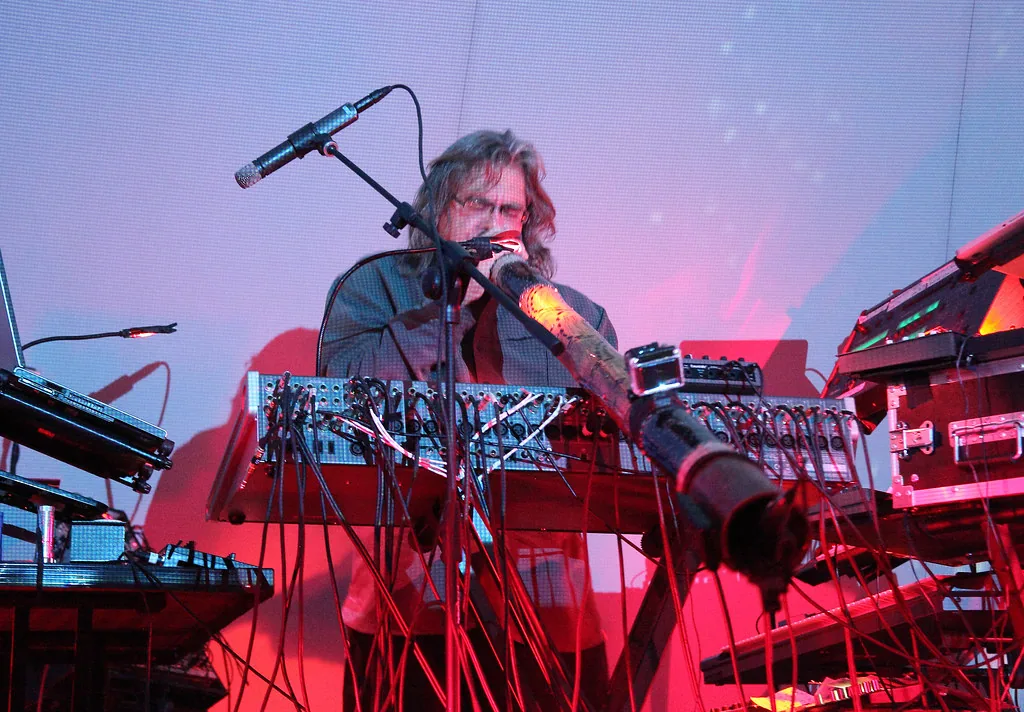
The didgeridoo: one note, many frequencies
A note is not a single point. Its fundamental determines its pitch, but the tube also produces harmonics that add to the perceived frequency spectrum.
Fundamental, timbre and overlap
When the drone’s harmonics overlap with handpan notes, it becomes harder to tell which instrument is playing what. Timbre affects perception: two instruments can play the same note and sound very different.
A contrast that needs balance
The contrast between deep bass and gentle notes creates a pleasing tension. If you can no longer make out the melody, first check the frequency ranges, attack and dynamics instead of questioning the musicians’ ability.
- Practical guide: if the melody gets lost, change the scale or move the solo into a higher register.
- Musical appeal: handled well, this duo can sound tribal, meditative or cinematic and stand apart from other musical instruments.
The frequency basics you need to play together without clashes
Understanding frequency helps turn a clash into shared musical space.

Frequency (Hz) is the number of air vibrations per second. The higher the value in Hz, the higher the perceived pitch.
Quick reference points for musicians
A simple rule: low pitch means fewer Hz; high pitch means more Hz. This helps you decide where to place the melody or drone.
Octaves and the 1:2 ratio
An octave corresponds to a 1:2 ratio. In other words, the frequency of one note is two times as high. This natural doubling explains why two instruments can seem to overlap.
| Term | Definition | Effect in a duo |
|---|---|---|
| Fundamental | A note’s main frequency | Establishes its pitch |
| Harmonic | A multiple of the fundamental | Can mask other sounds |
| Octave | A 1:2 ratio | Doubling that can add clarity or weight |
A quick exercise: identify the drone’s fundamental, then decide at what level the melody remains clear. This simple method keeps the two sounds from getting in each other’s way.
The didgeridoo’s spectrum: do not confuse the fundamental, harmonics and “vowels”
The tube’s sound can be analyzed as a stack of frequencies, with a fundamental that establishes its main note.
The harmonic series follows multiples of ×2, ×3, ×4 and so on: ×2 gives the octave, ×3 an approximate third, and so forth. Musically, this can create a sense of breadth, a fifth or a cavernous effect. A simple example: a D drone at about 74.43 Hz produces harmonics at 148.86 Hz, 223.29 Hz and beyond.
Passive and active: drone and vowels
The drone’s harmonics are often steady and low, at roughly 50 to 500 Hz. They are “passive” components that are difficult to remove.
Vowels are active formants shaped by the tongue, at roughly 500 to 3,500 Hz. They emphasize higher frequency bands and let you suggest a scale without changing the fundamental.
Shape and anticipation
A conical shape tends to distribute the first harmonics evenly. A more cylindrical shape emphasizes the fundamental and sometimes the fourth harmonic.
Remember: keep the approximate ranges in mind—drone: about 50 to 500 Hz; vowels: about 500 to 3,500 Hz—so you can anticipate how much space the solo needs.
- Check the spectrum before choosing a scale or playing level.
- If the melody gets lost, favor breathing techniques or vowels that leave room in the midrange.
Handpan and didgeridoo: how to make their frequencies work together
A good starting point is to identify the drone’s fundamental before choosing the second instrument’s register.
Choose a shared key and a comfortable range
A simple method: start with the drone note and choose a scale that avoids clashes. If the drone occupies the low end of the spectrum, place the melody higher.
Tuning to 440 Hz or 432 Hz
In practice: A at 440 Hz remains the usual reference when playing with other instruments, such as guitar or piano. A 432 Hz reference may suit a self-contained project, but it has no scientifically proven special effect.
Avoid troublesome notes
Fifths and octaves often cause fundamentals and harmonics to pile up. Test two or three notes on the second instrument against the drone and listen for beating or masking.
Examples of simple adjustments
- Keep the drone steady with few vowel changes, and play clear, airy patterns in a middle to high register.
- If the instruments use different tuning references, play more percussively, limit sustained notes or change register.
- If you regularly play as a duo, agree on the same tuning reference to make recording easier and support your musical intention.
To learn more, consult a frequency analysis that illustrates these principles.
Playing techniques that create space without reducing intensity
To preserve sonic space without sacrificing power, use focused playing techniques.
Clear roles: rhythmic foundation and melody
Setting stable roles prevents competition. One instrument provides the drone and rhythm; the other carries the melody, responses and breathing space.
Control volume and attack
Masking often happens at the start of a note. A strong attack can cover its beginning. Soften certain consonants in the breath and use light but precise strikes.
Vowels as a mixing tool
Use vowels to shift energy into the 500 to 3,500 Hz range when the melody is in the low register. When the melodic phrase expands, simplify the drone.
Use space and create contrast
Angle the instruments’ openings, adjust their distance and make use of silence. Long drones paired with short phrases make each part easier to hear.
A simple practice routine
- Two minutes of drone alone, keeping its spectrum steady.
- Two minutes of melody alone in the intended register.
- Two minutes together, adjusting only the attack and vowels.
To explore playing together in practice, try these adjustments in a real session and let your ears determine the final balance.
Rhythm and arrangement: give the duo room to breathe and avoid muddiness
Thinking in sections prevents buildup and gives each entrance a purpose.
To establish a shared pulse, begin with a simple four- or eight-beat cycle and steady it before adding variations.
Build the pulse and play in response
Start with a regular pattern. The drone follows a restrained pattern while the second instrument plays a short, repeating motif.
- Establish a steady cycle, then add variations gradually.
- Call and response: one phrase, then an answer, so each instrument has its own space.
Key moments in the arrangement
An effective structure: begin with the drone to set the mood, introduce the theme, build toward a more complex texture, then ease back to create breathing room.
Maintain the dynamics
Work on rhythmic density: fewer, better-placed notes, targeted accents and silences make the music easier to follow.
Rehearsal routine: play in sections of 30 to 60 seconds. Change just one element at a time—density, vowels or pattern—and check the result on a second pass.

A concrete example: the drone holds a pattern while the other instrument plays a short motif, stops for a second to let the rhythm breathe, then resumes higher up to mark the build.
Conclusion
Three practical, easy-to-test adjustments help balance the duo. Managing the frequency of the drone, its harmonics and its vowels keeps the melody clear.
First, choose the scale and register. Second, refine playing technique—attack, volume and vowels. Third, shape the arrangement with breathing room, dynamics and silence.
As for the debate between 432 and 440 Hz, remember that no scientific evidence supports a healing effect; this frequency mainly serves as a tuning reference when playing with other instruments. For more context, read a guide to 432/440 Hz tuning.
Quick checklist: test troublesome notes, limit doubling in the low register, alternate dense passages with silence, and record one minute. Train your ear, practice a simple pattern and change only one element at a time. You can then explore the duo without losing its balance.