
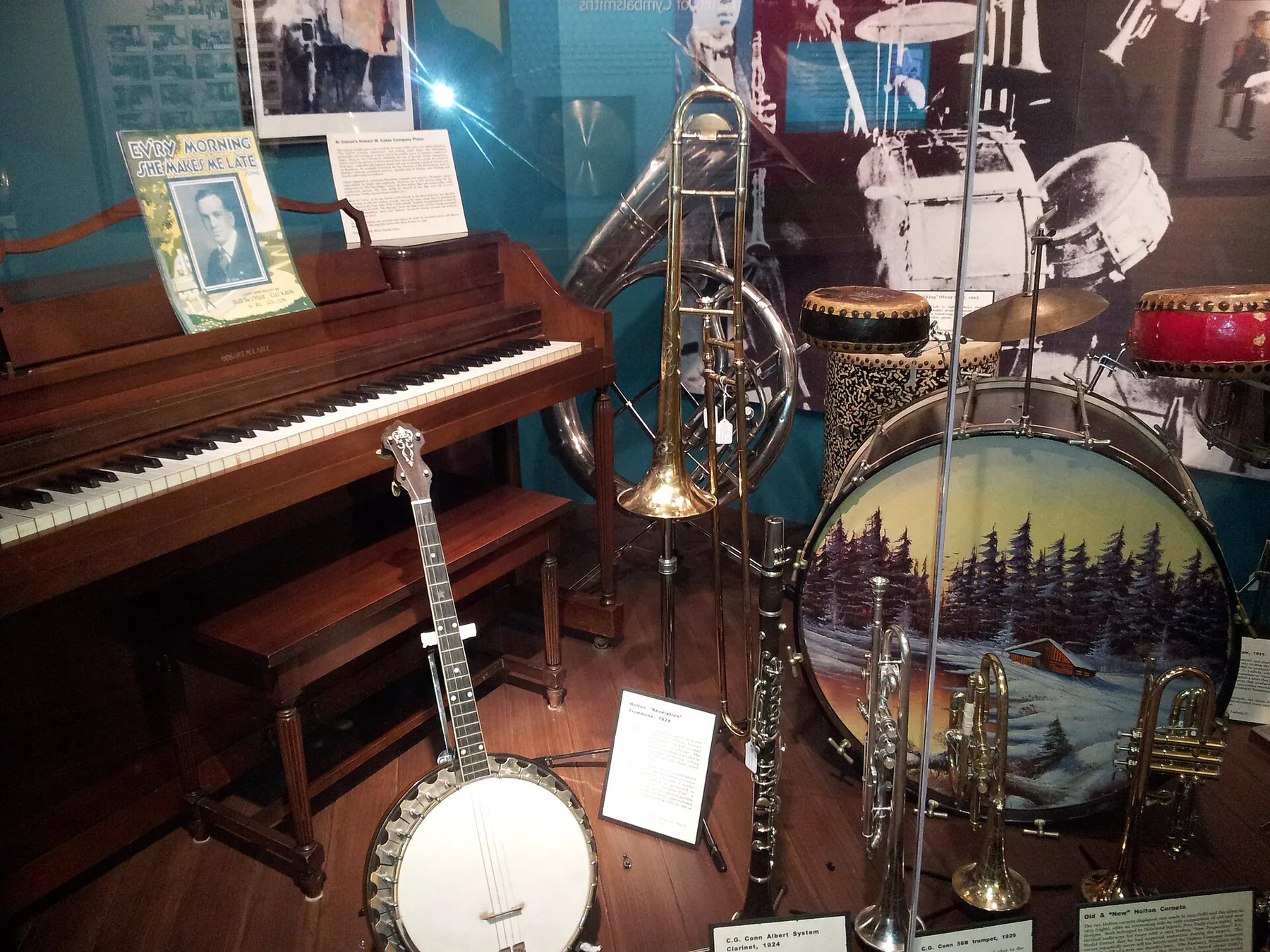
Luthiery and music are two worlds that come together to form a harmonious duo. Luthiers are craftspeople who specialize in making, repairing and restoring musical instruments such as guitars and violins. Their expertise in lutherie enables them to create custom instruments and bring old ones back to life. Luthiery is considered an art of instrument making, in which precision and craftsmanship are essential to producing quality instruments.
The art of inlay in lutherie
The art of inlay is an essential part of lutherie. Inlay designs are often considered works of art in their own right, featuring pictorial, narrative or highly personalized illustrations. Master inlay artists such as Grit Laskin, Harvey Leach and Larry Robinson have left their mark on the history of this craft. Inlay is painstaking work done by hand with materials such as mother-of-pearl and wood; each piece is unique. The art of inlay adds an aesthetic and personal dimension to musical instruments.
Inlay designs in lutherie are true works of art. Each piece is carefully designed and made by hand from materials such as mother-of-pearl and wood. Luthiers who are master inlay artists, such as Grit Laskin, Harvey Leach and Larry Robinson, are recognized for their craftsmanship and creativity in designing unique inlay patterns.
Inlay designs can take many forms, from delicate floral patterns to complex narrative illustrations. Each inlay is carefully planned and made to complement the rest of the instrument. These designs add an aesthetic and personal dimension to musical instruments, transforming them into true works of art.
Inlay is a labor-intensive process that demands close attention to detail and mastery of lutherie techniques. Luthiers who are master inlay artists devote many hours to each piece, ensuring that all its elements fit together harmoniously to create a captivating design.
“The art of inlay in lutherie is a perfect fusion of technical craftsmanship and artistic creativity. Every inlay is a true work of art, bringing a unique touch to each instrument.” — Grit Laskin
Inlay designs do more than decorate. They can also tell a story or represent specific themes, creating an emotional connection between a musician and their instrument. The art of inlay allows luthiers to express their creativity and make unique instruments that reflect each musician’s personality and style.
The protective role of inlays in acoustic guitars
Inlays in acoustic guitars are more than decorative: they also play a protective role. For example, the rosette, an inlay set into the guitar’s soundboard, helps protect it against cracks by reducing differences in moisture absorption. Likewise, the purfling inlaid around the inner edge of the soundboard helps reinforce it and protect it against cracks. Inlays therefore help preserve the structure and durability of acoustic guitars.
| Type of inlay | Protective role |
|---|---|
| Rosette | Protects the soundboard against cracks by reducing differences in moisture absorption. |
| Purfling | Reinforces the soundboard and protects it against cracks. |
The history of inlay in lutherie
The art of inlay in lutherie has a rich history stretching back several centuries. It draws on different traditions and influences and has evolved through successive periods and musical styles. During the Baroque period, for example, violins were spectacularly ornamented with lavish inlays. Over time, however, ornamentation became more restrained, emphasizing precise details such as inlaid purfling.
Classical luthiers drew inspiration from the traditions associated with the violins of that period and created elaborate inlays on their instruments’ fingerboards and rosettes. Inlaid purfling also became a distinctive feature of many string instruments, adding a touch of elegance and sophistication.
“The art of inlay in lutherie is a testament to the ingenuity and talent of the craftspeople who have shaped this field.”
Alongside historical influences, traditions and musical styles have also shaped the art of inlay. In the United States, for example, banjo makers adopted more flamboyant ornamentation, which influenced the making of steel-string acoustic guitars.
In short, the art of inlay in lutherie is the product of a long evolution and varied influences. It showcases the craftsmanship and creativity of artisans, who add an aesthetic and personal dimension to musical instruments.
Influences and traditions in the art of inlay
Inlays in lutherie often reflect the artistic and cultural influences of their time. Luthiers draw on traditional styles and patterns while adding their own personal touch. Baroque inlays, for example, feature elaborate floral patterns and scrollwork, while contemporary inlays may include modern and abstract designs.
The tradition of inlay has also been passed down from generation to generation. Master inlay artists have taught their techniques to apprentices, helping preserve this centuries-old art. Even today, many luthiers carry on these traditions and continue to create unique, dazzling inlays.
From ornamentation to protection: the evolution of inlays
Inlays in lutherie are not purely decorative: they also have a protective function. For example, the purfling around the inner edge of an instrument’s soundboard helps reinforce its structure and prevent cracks. Inlays can also protect the instrument’s most vulnerable parts against damage and wear.
| Influence | Characteristics of the inlays |
|---|---|
| Baroque period | Lavish ornamentation, artistic inlays |
| Classical lutherie | Elaborate inlays on fingerboards and rosettes |
| American tradition | Flamboyant approach, extravagant ornaments |
Inlays in lutherie thus combine an artistic dimension with a practical function, demonstrating the versatility of this centuries-old craft.
The journey of a passionate luthier: Gauthier Louppe
Gauthier Louppe is a passionate luthier who discovered his passion for music and lutherie at an early age. Drawn to the sound and beauty of musical instruments, he soon became interested in how they were made and restored. After exploring various lutherie traditions and techniques, Gauthier decided to pursue training in classical lutherie in Italy, where he gained the knowledge and skills needed to create exceptional musical instruments.
On returning to Belgium, Gauthier Louppe opened his own lutherie workshop, where he puts his skills and passion for making musical instruments into practice. He specializes in violins, violas and cellos and excels in contemporary lutherie.
Gauthier Louppe is also a strong advocate for sharing knowledge and lutherie training. He founded his own lutherie school, giving students the opportunity to learn and develop their skills in this distinctive craft.
Known for his contemporary style, Gauthier Louppe reinterprets traditional instrument shapes and models. He experiments with innovative materials and techniques while respecting the essential character and sound of classical instruments.
Thanks to his talent and passion, Gauthier Louppe has become a respected figure in contemporary lutherie. His instruments are valued by many musicians and played on major stages around the world.
As a passionate luthier, Gauthier Louppe continues to explore new directions in contemporary lutherie, pushing the boundaries of creativity and the sound quality of musical instruments.
Gauthier Louppe’s signature creations
| Instrument | Description |
|---|---|
| Violin | A violin with a contemporary design and a clear, powerful sound. |
| Viola | A viola with elegant lines and a warm tone. |
| Cello | A cello with a deep, expressive character, ideal for soloists. |
Conclusion
Lutherie and music truly form a harmonious duo. Passionate, talented luthiers apply their skills and expertise to making, repairing and restoring musical instruments. Instrument making is a craft that requires patience, precision and creativity. Thanks to luthiers, musicians have quality instruments that are personalized and suited to their needs. Lutherie brings art and music together, and luthiers play an essential role in that relationship.
Luthiers’ passion for music is reflected in every instrument they make. Their dedication to their craft and to quality enables them to bring unique instruments to life. That passion drives them to keep striving for excellence and innovation while respecting the traditions of lutherie.
Luthiers’ skills are also indispensable to the repair and restoration of musical instruments. They can bring old instruments back to life, repair cracks and restore their original sound. Their expertise and talent are invaluable in ensuring that musical instruments last.
Ultimately, lutherie is much more than a profession: it is a genuine passion that brings art and music together. Luthiers are the guardians of this craft and pass their skills from generation to generation. Their contribution to the world of music is invaluable: they provide musicians with exceptional instruments that accompany them throughout their musical journeys.
FAQ
What is lutherie?
Lutherie is the art of making, repairing and restoring musical instruments such as guitars and violins.
What do luthiers do?
Luthiers use their expertise in lutherie to create custom musical instruments and restore old ones.
What is the art of inlay in lutherie?
The art of inlay is an essential part of lutherie. It involves making unique inlay designs by hand with materials such as mother-of-pearl and wood.
What role do inlays play in acoustic guitars?
Inlays in acoustic guitars are decorative, but they also contribute to the instrument’s protection and durability.
What is the history of inlay in lutherie?
The art of inlay in lutherie dates back several centuries and has been influenced by different traditions and musical styles.
Who is Gauthier Louppe?
Gauthier Louppe is a passionate luthier known for his contemporary style and for making instruments such as violins, violas and cellos.


