This buying guide sets out a framework for evaluating an instrument before you buy it. It explains why prices vary so much with quality, craftsmanship and rarity.
The market in France spans a wide price range: serious models start at around €1,200, high-end instruments exceed €2,500, and rare pieces can cost more than €5,000, depending on the maker.
In this article, you will find a simple, practical method.
We will examine sound quality (tuning and sustain), durability, tuning stability and additional costs. The aim is clear: pay a fair price, avoid being misled and know what to ask of the seller.
We will cover current price ranges, cost factors, new versus used, handmade versus more standardized models, and a comparison chart to help you choose according to your budget and experience.
A complete buying guide to help you explore the subject and avoid common pitfalls.
Understanding handpan prices in France today
Understanding price tiers turns a vague idea into a practical budget.
Current price ranges
Here are clear reference points for 2024:
- Entry level: €800 to €1,200.
- Mid-range: €1,200 to €2,500.
- Exceptional or high-end piece: €2,500 to more than €5,000.
Why prices vary
The differences mainly reflect sound quality and durability, not just the seller’s margin.
Few makers can consistently produce stable instruments. Demand often exceeds supply, pushing prices up.
What to expect below €1,000
Below €1,000, expect compromises: less precise tuning, less reliable tuning stability and often uneven finishes.
Also consider the total cost: the instrument, case, delivery and any repairs. This calculation helps you distinguish a good price from a misleading one.
What raises or lowers the price of a handpan

Materials and treatments
The type of steel makes a difference. Mild steel needs more care and rusts more quickly. Nitrided steel has a harder, more stable surface. Stainless steel resists corrosion but changes the sound’s character.
Manufacturing techniques
Hand hammering requires considerable time and experience. Metal forming offers a compromise. Hydroforming standardizes the shape and reduces variation between instruments.
Tuning and adjustments
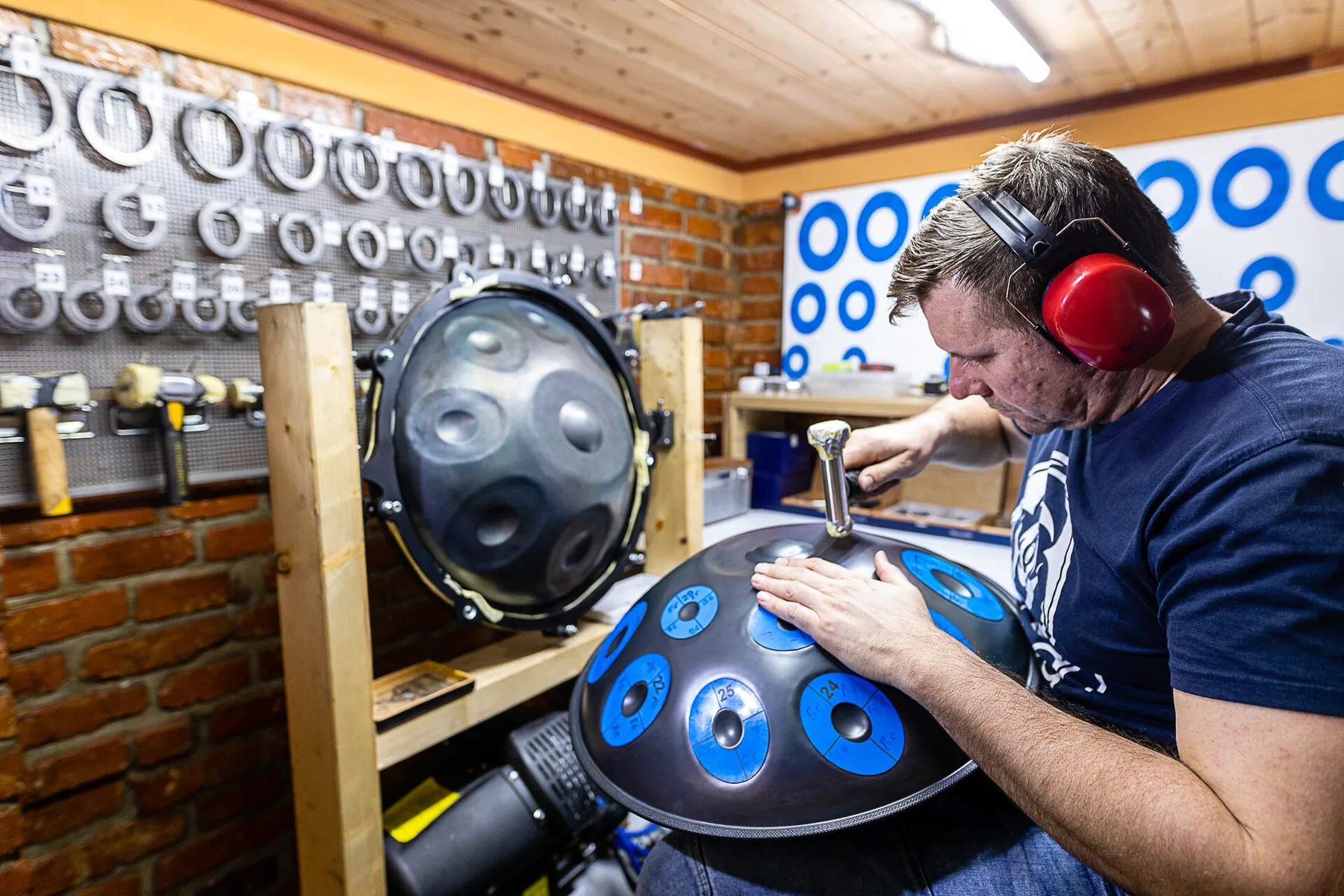
Hand tuning requires several passes over multiple days. Each pass improves stability and precision. This skilled labor is reflected in the price.
Number of notes and scale
The more tone fields there are to tune, the more complex their harmonic interactions become. An instrument with 10 to 17 notes requires more adjustment than one with 7 to 9 notes.
Reputation and rarity
Some established makers have considerable influence on the market. Their names may reflect quality or collectible value.
| Factor | Impact | What to check |
|---|---|---|
| Material | Durability, maintenance | Corrosion protection |
| Method | Sound consistency, cost | Hammering or hydroforming |
| Tuning | Stability, precision | Number of passes, warranty |
| Number of notes | Complexity, time | Scale and harmonic interactions |
Quick tip: if a listing promises many notes at a low price, ask about the manufacturing method, the tuning process and evidence of stability.
To learn more about budgets and cost factors, read this budget guide and this article on a instrument maker’s craftsmanship.
New handpan prices: benefits, warranties and waiting times
A considered purchase takes account of budget, waiting time and legal protection. For a quality instrument, plan for the full cost and delivery time.
Typical budget: in France, a reliable, carefully made model often costs between €1,000 and €2,000. This includes quality control, adjustments and finishing. A very low price often signals compromises in tuning stability.
Warranty, after-sales service and trial period
Legal guarantee: a two-year conformity guarantee applies to purchases from a professional seller. Many makers also offer after-sales service and sometimes a 14- to 30-day trial period.
Customization and its effect on cost
Choosing a scale, a specific frequency or a custom finish raises the price. Custom work takes more time and additional tuning passes.
Waiting times and availability
An instrument in stock is available immediately. A made-to-order instrument may take several weeks to several months. If you need it soon, look for an in-stock model; otherwise, allow time for the wait.
Checks before buying online
- Complete legal information and verifiable contact details.
- Clear return terms and evidence that the seller is operating.
- Customer reviews and the maker’s history.
“Paying a little more often helps avoid lost value and costly repairs.”
For practical advice and a comparison chart, read this detailed guide: choosing the right instrument.
Used handpan prices: bargains and risks to consider
The used market offers discounts and immediate availability, but it also carries risks.
Why buying used appeals: some buyers report discounts approaching half the original price and the chance to get an instrument immediately. For anyone in a hurry, that is a real advantage.

Technical risks to know about
Frequent tuning problems, metal deformed by impacts and visible corrosion all reduce an instrument’s musical quality and value.
An instrument that sounds beyond repair may seem cheap but cost far more in repairs and tuning time.
Warning signs and scams
Be wary of listings without proof that the seller owns the instrument, pressure to pay quickly or refusal to allow a trial. Inconsistencies in its history are a bad sign.
How to test before paying
- Check every note and the consistency of its sustain.
- Inspect the instrument for dents and rust.
- Ask for its maintenance history and retuning dates.
- Prefer an in-person handover with both parties present.
Tip: this market suits experienced buyers who can judge tuning. For a first purchase, prefer an option with a warranty. For practical checks, see this page on checks to make before buying.
Handmade versus more standardized handpan prices: what are you paying for?
Production time and key stages
Production can take a few weeks or two to three months, depending on the maker.
Each stage adds value: shaping the shells, forming the notes, rough tuning, heat treatments, gluing and polishing.
Skilled labor involves several tuning passes.
These adjustments stabilize the sound and reduce the risk of the instrument going out of tune in everyday use.
Heat treatments and nitriding
Nitriding and heat treatments improve resistance and stability.
Done poorly, they can alter the harmonics and harm quality. Done well, they help preserve the sound for longer.
When customization becomes high-end
Customization involves choosing a scale, specific frequencies and finishes.
More time and checks mean a higher cost. With several custom options, the instrument enters the high-end range.
| Element | Effect on sound | Effect on cost |
|---|---|---|
| Shaping | Shape and resonance | Manual work and production hours |
| Nitriding | Stability, longevity | Technical process often outsourced |
| Tuning | Pitch accuracy and sustain | Repeated passes, higher cost |
| Customization | Specific scale | Longer lead times, higher price |
“Paying a little more may be justified by better stability and resale value.”
For more information, read a detailed buying guide.
Handpan prices: what to compare when buying new, used or handmade
To make a sound choice, use a simple chart comparing tuning accuracy, sustain, finish and tuning stability.
Ready-to-use comparison chart
| Criterion | New | Used | Handmade |
|---|---|---|---|
| Note accuracy | Quality control and warranty | Varies with maintenance | Very precise if the maker is reputable |
| Sustain and consistency | Stable | May have declined | Refined through tuning passes |
| Finish | Standardized | Possible wear | Carefully finished, customized |
| Stability after playing | Good with proper care | Check before buying | Excellent if treatment is done well |
Assessing value for money
What justifies a higher price: tuning stability, finish and the maker’s reputation.
Warning signs: an unusually low price without an explanation, or a listing that offers neither a trial nor a maintenance history.
“Ask for recordings, a return policy and the date of the last tuning before paying.”
Additional costs to include
- Delivery and protective packaging.
- Shipping insurance.
- Taxes and duties on imports.
These costs can tip the balance between two offers. For used models, also check their actual condition before paying, or look at certified offers such as those in a dedicated collection.
Resale value and choosing for your situation
What preserves value: stable tuning, regular care, no dents, documentation and the maker’s reputation.
What reduces value: corrosion, uneven notes and visible repairs.
For a first purchase, prioritize a warranty and stability. If resale value matters to you, look for recognized makers and well-documented instruments.
Choosing the right handpan for your budget and experience
Choosing according to your budget and experience helps you progress with confidence.
Beginner budget: 7 to 9 notes
Why: fewer tone fields make learning and hand coordination easier.
Choose a simple, stable instrument. You will spend less and devote more time to playing.
Intermediate budget: 9 to 10 notes
The range expands without excessive complexity, giving you more melodic possibilities.
At this level, look for a consistent sound and a reputable maker.
Advanced budget: more notes and advanced options
Expect 10 to 17 notes, careful finishes, treatments and hand adjustments. Here, the price reflects time and craftsmanship.
Consider a high-end instrument if you perform publicly or collect handpans.
Practical tips for paying a fair price
- Choose a known maker and ask for evidence of accurate tuning.
- Compare instruments with similar scales and note counts.
- Include additional costs (case, transport, warranty).
| Experience | Number of notes | Goal |
|---|---|---|
| Beginner | 7 to 9 | Learning, stability |
| Intermediate | 9 to 10 | Expanding the range |
| Advanced | 10 to 17 or more | Performance, collecting |
“Choose according to how you will use it: playing, teaching and collecting each affect what constitutes a fair price.”
Conclusion
Ultimately, use a clear method rather than judging by the asking price alone.
Set a realistic range (often €1,200 to €2,500) and be cautious about offers below €1,000, which involve compromises.
For a first purchase, favor a new instrument from a professional seller: a two-year guarantee, after-sales service and a trial period reduce the risks. Buying used remains worthwhile if you can test the instrument and check its tuning and history.
Always include the total cost (delivery, insurance and taxes) to avoid a false saving. Choosing well protects your money, your enjoyment of playing and the instrument’s lasting sound quality.
Use the comparison chart and follow the checklist before paying. For more detail on prices, read this price guide.