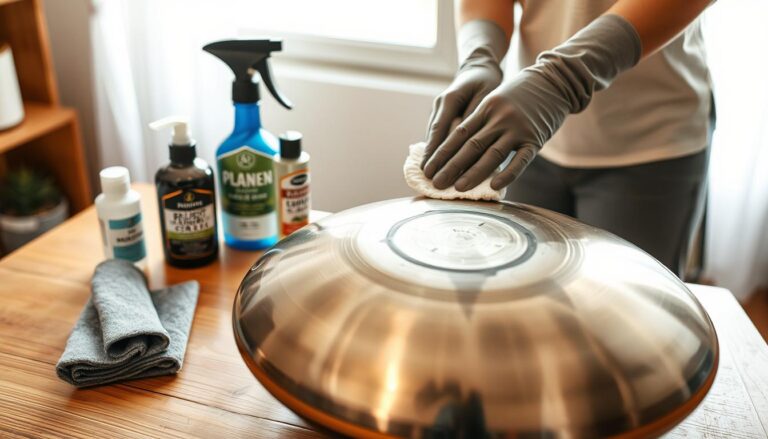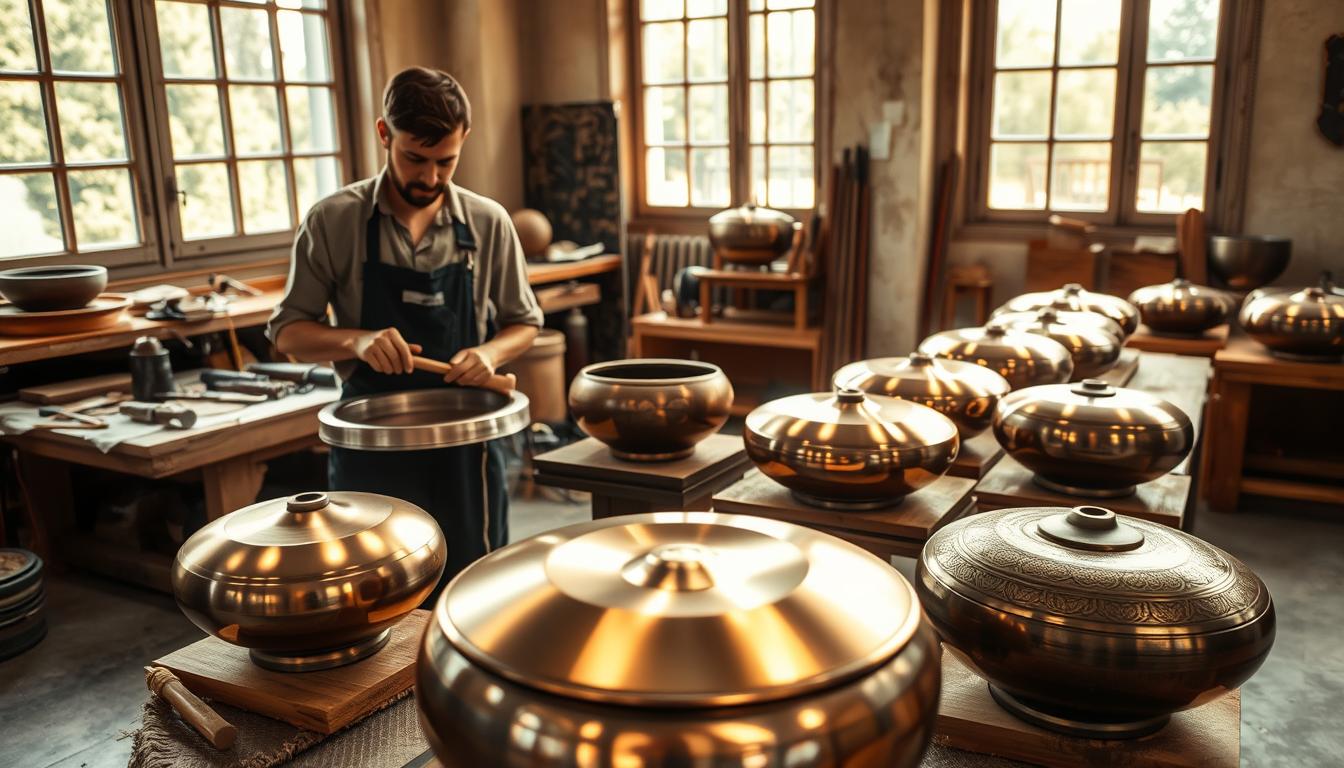
Guide objective: provide a clear buying guide for comparing workshops, estimating lead times and checking an instrument before paying.
This musical instrument originated in Switzerland in 2001 and spread rapidly. There are now more than 300 workshops worldwide, making instruments easier to obtain while increasing the risk of scams.
We offer practical advice on construction and sound, materials and scales, budgeting and buying safely. The guide begins with the basics, then examines the market and its pitfalls.
You face three main decisions: the sound you want, long-term reliability and the buying experience (trying the instrument, after-sales support and warranty).
A practical approach: buy with confidence, without rushing, by carrying out simple checks you can repeat. To learn more about local workshops and good practices, see our guide to makers.
Why buy a handpan in France today?
Choosing a nearby workshop makes it easier to try an instrument, customize it and obtain ongoing support.
Local craftsmanship and shorter supply chains
Direct contact: meeting makers lets you assess their production methods and materials in person.
Shorter supply chains mean fewer intermediaries and greater transparency about production.
Customization and the workshop experience
A practical choice: you can discuss the scale, number of notes, finish and ergonomics during a workshop visit.
Direct contact improves the buying experience and builds confidence in after-sales support.
Durability, support and environmental impact
Several workshops apply heat or anticorrosion treatments and offer tuning adjustments as part of their services.
Some recycle metal offcuts, demonstrating a practical commitment to the environment.
| Criterion | Advantage of a local workshop | Point of comparison |
|---|---|---|
| Trying the instrument | Possible in person | Rarely possible before buying an import |
| Support | Adjustments and warranty | Service varies by seller |
| Transparency | Knowledge of the materials used | Information is sometimes limited online |
Practical tip: if you are deciding between an import and a local workshop, prioritize traceability, an opportunity to try the instrument and after-sales support. To compare workshops and prepare for your purchase, see this useful resource on buying a handpan.
Understanding the handpan before you buy
Before buying, learn how the instrument is built and why each detail matters.
The instrument’s components: Ding, hammered tone fields and Gu
Basic structure: two joined shells, often made of nitrided steel or stainless steel. The central Ding produces the main note.
The surrounding hammered tone fields produce the other notes. The Gu, a resonance opening, enriches the harmonics and projection.
A young but extensive market
The instrument emerged in 2001, and more than 300 workshops now make handpans worldwide. Quality varies considerably.
“A resonant Gu and notes that open up without unwanted noise are good signs.”
- Listening: check for unwanted metallic noise.
- Stability: construction affects tuning and projection.
- Corrosion: ask about treatments and materials.
These basics will help you ask sellers the right questions and compare models. For more practical advice, see our buying guide.
Handpans in France: makers, lead times and what to check
Before completing a purchase, examine the instrument and its sound separately: your choice combines an instrument, a scale, a number of notes, a tuning reference and materials.
The scale and number of notes affect playability. A configuration of around nine notes works well for getting started and progressing.
The tuning reference (440 Hz or 432 Hz) affects playing with others and the perceived sound. Treatments applied to nitrided or stainless steel change the sound response and long-term durability.
Three decision criteria
Sound quality: timbre, sustain and balance between low and high notes.
Reliability: tuning stability, corrosion resistance and the maker’s adjustment policy.
Experience: opportunities to try the instrument, warranties and after-sales support.
- A complete specification sheet (scale, number of notes and materials).
- Recent recordings and video so you can hear the instrument.
- A clear retuning policy and a transparent seller.
“A musical instrument should be stable and enjoyable to play, not merely attractive in photos.”
These criteria set up the next steps: comparing workshops, understanding lead times and spotting warning signs of counterfeits.
Handpan makers in France: how to compare them
Comparing local workshops calls for a method that goes beyond instinct. Start by listening to several instruments and gathering clear specification sheets. A sound assessment considers the sound, documentation and the makers’ transparency.
Established maker or new workshop
An established maker may be able to show years of tuning experience, buyer feedback and consistent production. They may also have a well-developed after-sales service.
A new workshop may innovate, but check its recordings and after-sales terms before buying.
What should a reliable specification sheet include?
Essential information: steel type, reference frequency (for example, 440 Hz), number of notes, model, audio and video recordings, warranty terms and adjustment policy.
Specialties and signs of trustworthiness
Some offer pentatonic scales (Amatis), premium finishes (Saraz) or ergonomic innovations (PanStream). Shellopan, Baopan, Elixia and Mayura are other names to examine.
Certifications and assessment method
Look for traceability, transparent practices and, where applicable, certification (such as AFNOR) as an indication of professionalism.
“Play the same sequence in several videos to compare how the notes sustain.”
Decision checklist: shortlist three makers and compare their sound, stability, finishes, lead times and service before deciding.
Production and delivery times: what to allow for
Understanding the production steps helps you estimate manufacturing and delivery times.
Why a wait is normal: a handmade instrument requires precise tuning and checks, and a workshop may have a full order book. These steps take time and improve the instrument’s long-term stability.
Typical lead times
In stock: quick dispatch, from a few days to a month.
Small batch: allow a few weeks to about two months (for example, around two months for PanStream).
Custom-made: several months may be needed (for example, around six months for Saraz; around one month for standard Amatis models).
Why lead times grow
- Tuning adjustments after testing.
- The scale’s complexity and the number of notes.
- Special finishes and the order in which commissions are prioritized.
Planning without stress
Set a target date and add a safety margin. Ask for a schedule of updates, perhaps with a monthly check-in.
For delivery, require shipping insurance, reinforced packaging and a procedure for dealing with damage. A documented lead time and good after-sales service are often encouraging signs.
“Urgency increases the risk of mistakes: choose a written schedule over a flash sale.”
To learn more about instrument making and craft processes, read about conservatory instrument making.
Materials and quality: nitrided or stainless steel
The metal you choose shapes the instrument’s timbre, care needs and longevity. Here we compare two common materials to help you read product specifications.
Nitrided steel: quick response and durability
Advantages: nitrided steel offers good corrosion resistance and a quick attack. Its tone is often described as warmer.
Typical figures: a thickness of 0.8 to 1.2 mm and an estimated lifespan of more than 10 years.
430/441 stainless steel: brightness and sustain
Stainless steel offers longer sustain (often >8 seconds) and pronounced brightness. It requires more regular care and scratches more easily.
Thickness, heat treatment and stability
Thickness and heat treatment affect tuning stability. Well-controlled treatment stabilizes the harmonics.
In practice, choose a material based on how you will play (rhythmic or meditative playing, or outdoor use) and how much maintenance you are willing to do.
| Criterion | Nitrided steel | 430/441 stainless steel |
|---|---|---|
| Sound character | Warm sound, quick attack | Bright sound, long sustain |
| Typical thickness | 0.8 to 1.2 mm | 1.4 to 1.8 mm |
| Maintenance | Low | More regular (monthly waxing) |
| Indicative lifespan | More than 10 years | 8 to 10 years |
“The material affects everyday use as much as sound.”
Scales, keys, tuning reference and note count: choose for your music
Choosing the right scale establishes the character of your playing from the outset. This first decision affects the mood, ease of improvisation and main use.
Common beginner scales
D Kurd remains a versatile standard. This scale makes improvisation easier and suits many styles.
More distinctive sounds
Celtic Minor creates a captivating atmosphere. Pygmy lends itself to meditative playing. Eastern-inspired scales such as Zaora offer richly colored harmonics.
Number of notes and tuning reference
Recommendation: a nine-note configuration (eight notes plus the Ding) is ideal for progressing without feeling overwhelmed. Models with too few notes limit exploration.
A 440 Hz reference suits playing with a group. Some choose 432 Hz for solo playing or wellness activities, though it is less compatible with ensembles.
Range and testing method
Check that the notes sound consistent, the low and high notes are balanced, and none are overpowering or weak. Play the same sequence on several instruments to compare your impressions.
| Criterion | D Kurd | Alternatives | Recommended use |
|---|---|---|---|
| Mood | Versatile | Celtic Minor, Pygmy or Zaora | Composition, improvisation |
| Number of notes | 9 (8 plus the Ding) | 8 to 11, depending on the workshop | Progression and stability |
| Tuning reference | 440 Hz, standard reference | 432 Hz for solo playing or wellness activities | Group or individual playing |
| Testing method | Repeated sequence | Compare videos and live trials | Consistency across notes |
“Always connect your choice of scale to its purpose: composing, relaxing or playing with others.”
Budget, price and value for money in France
Understanding the real cost helps you avoid deals that only look attractive. Set an initial budget, then add related costs to calculate the total.
Typical price ranges
| Level | Recommended use | Price range (€) |
|---|---|---|
| Entry level | Getting started | 800 to 1,200 |
| Mid-range | Regular playing | 1,500 to 2,500 |
| Custom-made or premium | Demanding sound and finish requirements | 3,000 and above |
What increases the price
Labor accounts for around 60% of the cost: precise adjustments and tuning time matter. Materials make up around 25% of the total (nitrided steel often costs 15% more as a raw material).
Research, development and innovation add around 15%. An instrument with a note count above ten costs about 20% more on average.
Additional costs to plan for
- Bag or case: €150 to €300
- Stand: around €80
- Insurance: around €50 per year
- Possible retuning: set aside a maintenance budget
“Prioritize stable sound over the greatest possible number of poorly controlled notes.”
A practical rule: if the price is unusually low for the French market, make extra checks (origin, audio recordings and warranty) before any purchase.
Where to buy a handpan in France: makers, dealers, platforms and shops
Where you buy often determines delivery speed and how much you can learn about the instrument’s origin.
Your choice of seller also affects your chances to try the instrument, obtain support and protect the transaction.
Buying directly from a maker
Advantages: trying the instrument on site, customization and traceability. Some workshops offer free retuning for two years.
Tip: ask for the adjustment terms and delivery schedule in writing.
Specialist dealers
Dealers offer broad catalogs and often faster delivery. They bring several models together, making comparisons easier.
For example, Handpan France is a dealer known for its sound tests, free returns and responsive after-sales service.
Specialist platforms and general marketplaces
On a specialist platform, look for warranties (three years, for example) and a curated selection. On general marketplaces, examine the origin and quality of listings carefully.
Music shops
Woodbrass, Djoliba and La Baguetterie let you try an instrument immediately and offer local after-sales support. That can be helpful for a first purchase.
Festivals and events
Festivals offer excellent opportunities to compare several instruments and models under real listening conditions.
“Trying an instrument in person remains the best way to judge its sound, sustain and playing comfort.”
- Risk: an online sale without a certificate.
- Advantage: an opportunity to try the instrument, after-sales support and fast delivery, depending on the channel.
Buying used and reselling: good practices to avoid mistakes
Buying a used instrument can save you a substantial amount and provide quick access to sought-after models.
However, beware of the risks: unstable tuning, hairline cracks, oxidation or hidden impact damage can reduce its real value.
What a trustworthy listing should include
- Exact brand and model.
- Year of manufacture and serial number.
- Instrument history (years of use and repairs).
- A recent video playing each note and high-resolution photos.
Practical checks and verification
Ask to try the instrument in person when possible. Inspect its surface and test every note with a tuner.
If you are unsure, contact the maker to confirm authenticity and avoid speculative resellers. This reduces unpleasant surprises if you resell it later.
“A complete listing substantially reduces the risk of a used-instrument transaction.”
If the listing has neither a video nor a serial number, lower your offer or walk away. When reselling, keep all documents and set a price based on the instrument’s actual condition.
Scams and counterfeits: warning signs to know
Growing popularity attracts opportunistic sellers. Beware of listings that create urgency or appeal to emotion. The large number of offers makes it easier to copy listings and resell instruments speculatively.
Deals that seem too good: an unusually low price, an inconsistent sales story or pressure to pay immediately are clear warning signs. Ask for proof and walk away if the seller remains vague.
Stolen photos and old videos
Run a reverse image search if you suspect someone is misrepresenting the instrument. Require a dated video showing every note and a close-up of the Gu. Without a dated video, decline the transaction.
Platforms and payments
On eBay or classified-ad sites, be cautious with new accounts or sellers with few ratings. Avoid Western Union and payments outside the platform.
Concrete signs of poor quality
Recognizing a poor-quality instrument helps you avoid mistakes: a Gu with little resonance, a metallic, “pot-like” timbre, uneven notes or unstable tuning.
| Risk | Sign | Recommended action |
|---|---|---|
| A deal that seems too good | Very low price, pressure to act quickly | Request a dated video; walk away if refused |
| Stolen photos | Images already seen online | Run a reverse search; require a photo or video taken by the owner |
| Risky payment | Western Union, direct bank transfer | Choose buyer protection and secure payment |
| Poor quality | Metallic sound, Gu with little resonance | Test each note and ask a maker for an opinion |
Be cautious: if you are unsure, ask the community or contact the maker to confirm the instrument’s authenticity. A good seller allows inspection and provides clear evidence about the sale.
Conclusion
To make a good choice, prioritize listening, traceability and clear support. Choose an instrument that sounds consistent, stays in tune and suits your music over the “best deal.”
Method: compare workshops, understand the materials, allow for production time and choose a secure buying channel. Ask for a specification sheet, recent videos and after-sales terms.
Practical tip: shortlist two or three options, listen to several comparable recordings, then decide using written criteria (budget, lead time and service). Take the time to check every point carefully.
For more information and structured opinions, read this detailed assessment, which brings together this advice and helps you buy with confidence.